
The Rhythm of the Spheres
Reading the Night Sky
Wandering in Astronomy
The night sky is the oldest pattern of man, and every culture reads it differently. The stars above keep silent time, moving to a rhythm we are just now beginning to understand. Astronomy is where math, science, art, music, and words meet in a wondrous collision. In this section of our site, learn the basics of astronomy: from how a star chart is made, to projections and art that map the night sky, to how an astrolabe works just like it did thousands of years ago. Watch the North Star shift across centuries, explore how one sky has been mapped by many traditions, read what happened on this day in space, and see tonight’s moon for your location.
Map the Stars
The math behind star charts, with a projection explorer and a working astrolabe.
The Moving Sky
How the sky shifts across centuries, with a precession clock you can run.
The Traditions
One sky reads many ways, with a same-sky overlay of the world’s constellations.
This Day in the Stars
The sky’s events, discoveries, and lore tied to today’s date.
The Moon Tonight
Its phase and face, drawn live for where you’re standing.
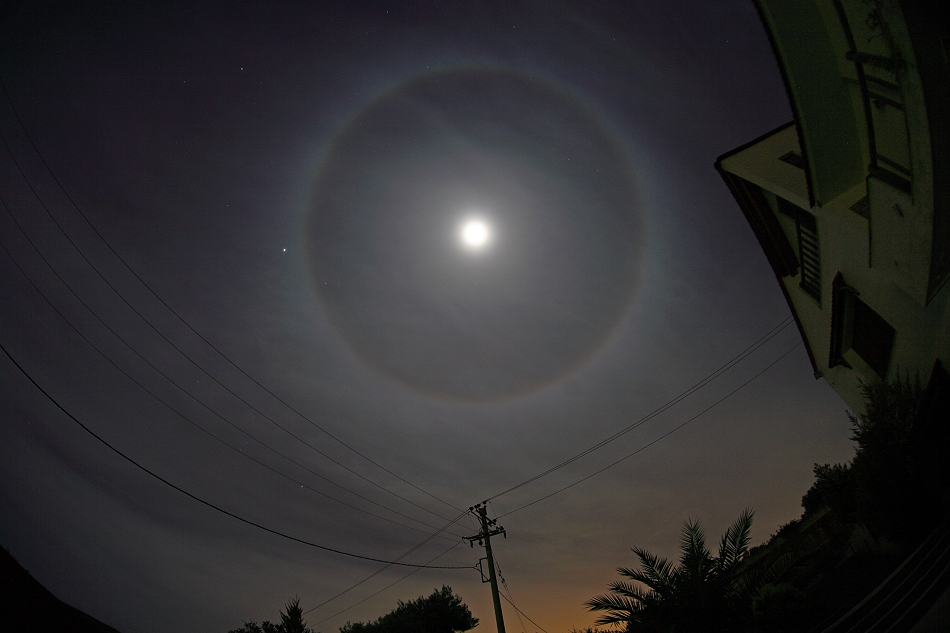
A Halo Around the Moon

Customized Star Charts Coming 1st Quarter 2027
We respect your privacy. Unsubscribe at any time.
The aftermath of a solar flare
Mark Johnston from Scottsdale, Arizona On Aug. 21, 2026, an unusually long-lasting M-class flare erupted from a sunspot group near the Sun’s west limb. As the flare’s stretched magnetic fie…
ReadSept. 4, 973 C.E.: The birth of al-Biruni
Born in Kath, Khwarezm – a region that today would be cover parts of Uzbekistan, Kazakhstan, and Turkmenistan – Abu Raihan Muhammad al-Biruni was a man of many scientific talents. His extensive…
ReadMars’ southern hemisphere is unusually hot deep underground
A new study from Caltech shows that Mars' southern hemisphere is much hotter than expected deep below the surface. Why is that?
ReadSun news: More action from returning sunspot region
Sun news September 4, 2026: Returning region AR4524 fired an M1.2 flare. Its last pass across the Earth-viewed sun was promising, so stronger flares may follow.
ReadVisible planets and night sky guide for September
Visible planets and night sky guide: The moon reaches 3rd quarter today, rising about midnight to set around noon. Look for the daylight moon tomorrow morning!
ReadThe Sky Today on Friday, September 4: Get in a workout
Looking for a sky event this week? Check out our full Sky This Week column. September 3: The Moon in Taurus Last Quarter Moon occurs at 3:51 A.M. EDT, leaving our evening sky comple…
ReadHot subdwarfs come into focus as AI scans thousands of stars in Gaia data
There are myriad ways of "being a star," and scientists spend years trying to uncover and understand them. One unusual type is the so-called hot subdwarf—small stars that burn mysteriously hot fo…
ReadPhoto: NASA's Hubble spies superbubble scene
This NASA/ESA Hubble Space Telescope image features a sprawling cosmic vista in the Large Magellanic Cloud, or LMC, the largest of the small galaxies that orbit our Milky Way galaxy. At just 160,00…
ReadNewly discovered 1666 manuscript may trace four-lens telescope experiments to Galileo
A potentially history-altering finding by a University of Limerick researcher may provide the most detailed technical analysis of a telescope demonstrably made by the famous astronomer and scientis…
Read