
The Rhythm of the Spheres
Reading the Night Sky
Wandering in Astronomy
The night sky is the oldest pattern of man, and every culture reads it differently. The stars above keep silent time, moving to a rhythm we are just now beginning to understand. Astronomy is where math, science, art, music, and words meet in a wondrous collision. In this section of our site, learn the basics of astronomy: from how a star chart is made, to projections and art that map the night sky, to how an astrolabe works just like it did thousands of years ago. Watch the North Star shift across centuries, explore how one sky has been mapped by many traditions, read what happened on this day in space, and see tonight’s moon for your location.
Map the Stars
The math behind star charts, with a projection explorer and a working astrolabe.
The Moving Sky
How the sky shifts across centuries, with a precession clock you can run.
The Traditions
One sky reads many ways, with a same-sky overlay of the world’s constellations.
This Day in the Stars
The sky’s events, discoveries, and lore tied to today’s date.
The Moon Tonight
Its phase and face, drawn live for where you’re standing.
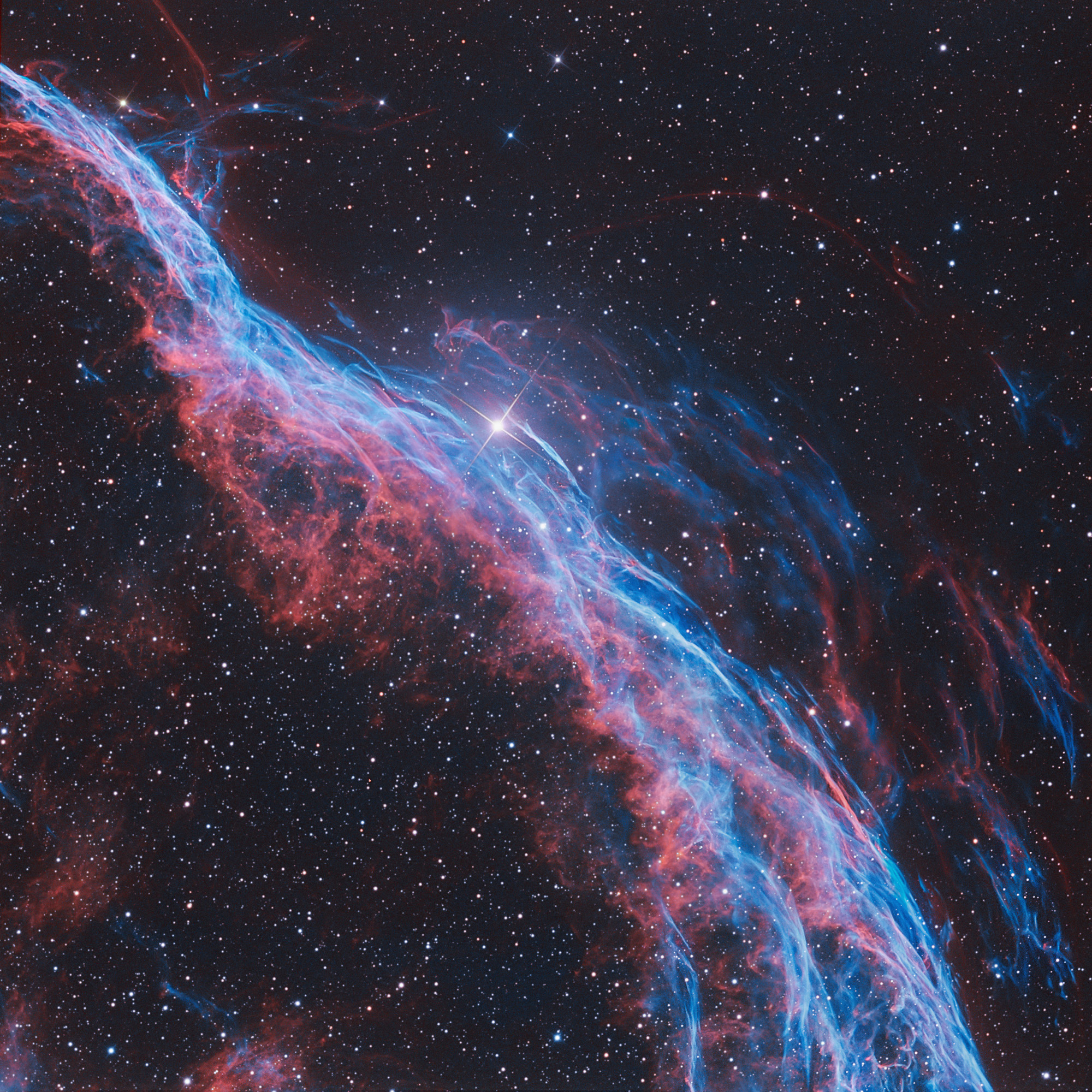
NGC 6960: The Witch's Broom Nebula

Customized Star Charts Coming 1st Quarter 2027
We respect your privacy. Unsubscribe at any time.
MeerKAT directly detects faint hydrogen signal from the distant universe
Astronomers from the University of Manchester and the University of the Western Cape have directly detected an extremely faint radio signal from hydrogen gas billions of light-years away, opening a…
ReadAI tool detects unusual satellite behavior to improve space safety
A new AI model can monitor satellites and spot anomalies in their behavior, reducing the risk of in-orbit collisions, according to new research published in the journal Expert Systems.
ReadWhy doesn’t the moonrise time change by the same amount of time each day?
Why does the daily moonrise time change by as much as 60 minutes from the previous day, and as little as 30 minutes during the same month? Jim WakefieldBend, Oregon It depends on how far the Moon d…
ReadRoman Space Telescope lifts off
The journey of a million miles began with a successful launch Sunday morning. NASA’s next-generation observatory, the Nancy Grace Roman Space Telescope, took off from Kennedy Space Center in Flor…
ReadSept. 1, 1804: Karl Harding spots 3 Juno
On Sept. 1, 1804, German astronomer Karl Ludwig Harding peered through a 5-centimeter refracting telescope at a private observatory near Bremen, and discovered a celestial body he named Juno. Hardi…
ReadA supermassive black hole erupted in X-rays, and its radio jets followed 300 days later
By combining roughly two decades of observations from NASA's Swift X-ray Telescope with radio monitoring, astronomers have caught a supermassive black hole at the heart of the Perseus Cluster sudde…
ReadHow do lava-world exoplanets keep their atmospheres?
A new study from researchers at Stanford University helps explain how hot lava-world exoplanets orbiting close to their stars can maintain their atmospheres.
ReadWill El Niño become supersized? What experts are saying
El Niño is here. But will it become supersized? NOAA says there's a 90% or greater chance for El Niño to become "very strong" between September and January.
ReadRoman space telescope has launched! You can adopt a pixel
The Nancy Grace Roman Space Telescope launched on August 30, from the Kennedy Space Center. Want to add your name to a pixel? Find out how here!
Read