
The Rhythm of the Spheres
Reading the Night Sky
Wandering in Astronomy
The night sky is the oldest pattern of man, and every culture reads it differently. The stars above keep silent time, moving to a rhythm we are just now beginning to understand. Astronomy is where math, science, art, music, and words meet in a wondrous collision. In this section of our site, learn the basics of astronomy: from how a star chart is made, to projections and art that map the night sky, to how an astrolabe works just like it did thousands of years ago. Watch the North Star shift across centuries, explore how one sky has been mapped by many traditions, read what happened on this day in space, and see tonight’s moon for your location.
Map the Stars
The math behind star charts, with a projection explorer and a working astrolabe.
The Moving Sky
How the sky shifts across centuries, with a precession clock you can run.
The Traditions
One sky reads many ways, with a same-sky overlay of the world’s constellations.
This Day in the Stars
The sky’s events, discoveries, and lore tied to today’s date.
The Moon Tonight
Its phase and face, drawn live for where you’re standing.
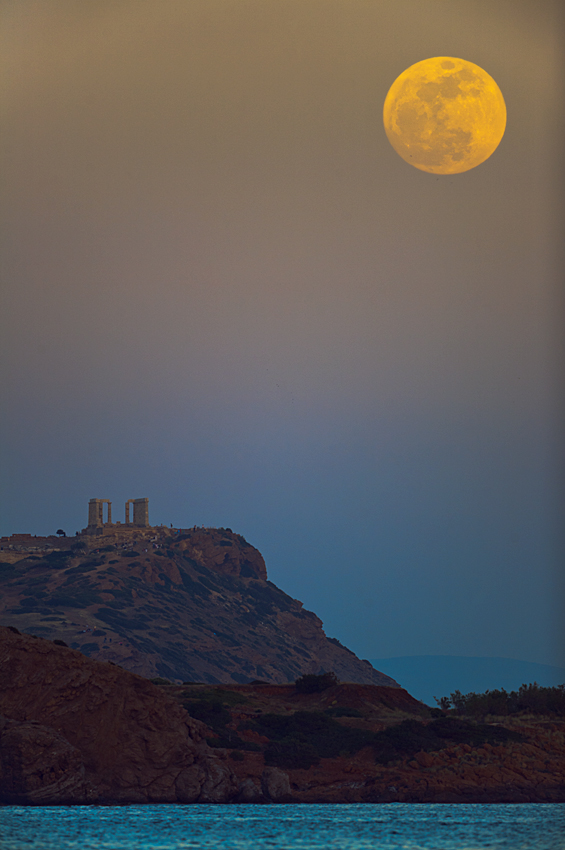
Perigee's Full Moon

Customized Star Charts Coming 1st Quarter 2027
We respect your privacy. Unsubscribe at any time.
FAST finds two mysterious hydrogen clouds with no visible stars
Astronomers have found two clouds of hydrogen near the Whirlpool galaxy that appear to contain almost no stars. The clouds, discovered with China's FAST radio telescope, each contain roughly 3 mill…
ReadA black hole as light as 40 tons can exist inside a star if dark matter helps
In 1974, Stephen Hawking made a prediction that transformed our understanding of black holes. Black holes, he showed, are not truly black: They slowly lose energy through a quantum process now know…
ReadSept. 5, 2001: The Milky Way has a black hole
NASA’s Chandra X-Ray Observatory is the agency’s flagship mission for X-ray astronomy. On Sept. 5, 2001, NASA announced that astronomers using Chandra in October of the previous year had witnes…
ReadSun news: Bam bam! The sun issues a 1-2 punch
Sun news September 5, 2026: Bam bam! Two eruptions in quick succession sent prominences soaring from both eastern limbs. Their CMEs look set to miss Earth.
ReadVisible planets and night sky guide for September
Visible planets and night sky guide: Tomorrow morning, the crescent moon will hang close to the red planet Mars with bright Jupiter closer to the horizon.
ReadThe Sky Today on Saturday, September 5: Titan near Saturn
Looking for a sky event this week? Check out our full Sky This Week column. September 4: Get in a workout Titan, Saturn’s brightest moon, orbits its parent world with a period of about 16 day…
ReadScientists watch as two satellites burn
The last two spacecraft of the European Space Agency’s (ESA) Cluster mission plunged into Earth’s atmosphere this week, closing out 26 years of research into the planet’s magnetic…
ReadTurbulent times for star formation in Stephan's Quintet
Star formation in galaxies is closely linked to molecular gas. In the distant past, when galaxy interactions were more common, these encounters compressed molecular gas, causing dense clouds to col…
ReadMars’ southern hemisphere is unusually hot deep underground
A new study from Caltech shows that Mars' southern hemisphere is much hotter than expected deep below the surface. Why is that?
Read