
The Rhythm of the Spheres
Reading the Night Sky
Wandering in Astronomy
The night sky is the oldest pattern of man, and every culture reads it differently. The stars above keep silent time, moving to a rhythm we are just now beginning to understand. Astronomy is where math, science, art, music, and words meet in a wondrous collision. In this section of our site, learn the basics of astronomy: from how a star chart is made, to projections and art that map the night sky, to how an astrolabe works just like it did thousands of years ago. Watch the North Star shift across centuries, explore how one sky has been mapped by many traditions, read what happened on this day in space, and see tonight’s moon for your location.
Map the Stars
The math behind star charts, with a projection explorer and a working astrolabe.
The Moving Sky
How the sky shifts across centuries, with a precession clock you can run.
The Traditions
One sky reads many ways, with a same-sky overlay of the world’s constellations.
This Day in the Stars
The sky’s events, discoveries, and lore tied to today’s date.
The Moon Tonight
Its phase and face, drawn live for where you’re standing.
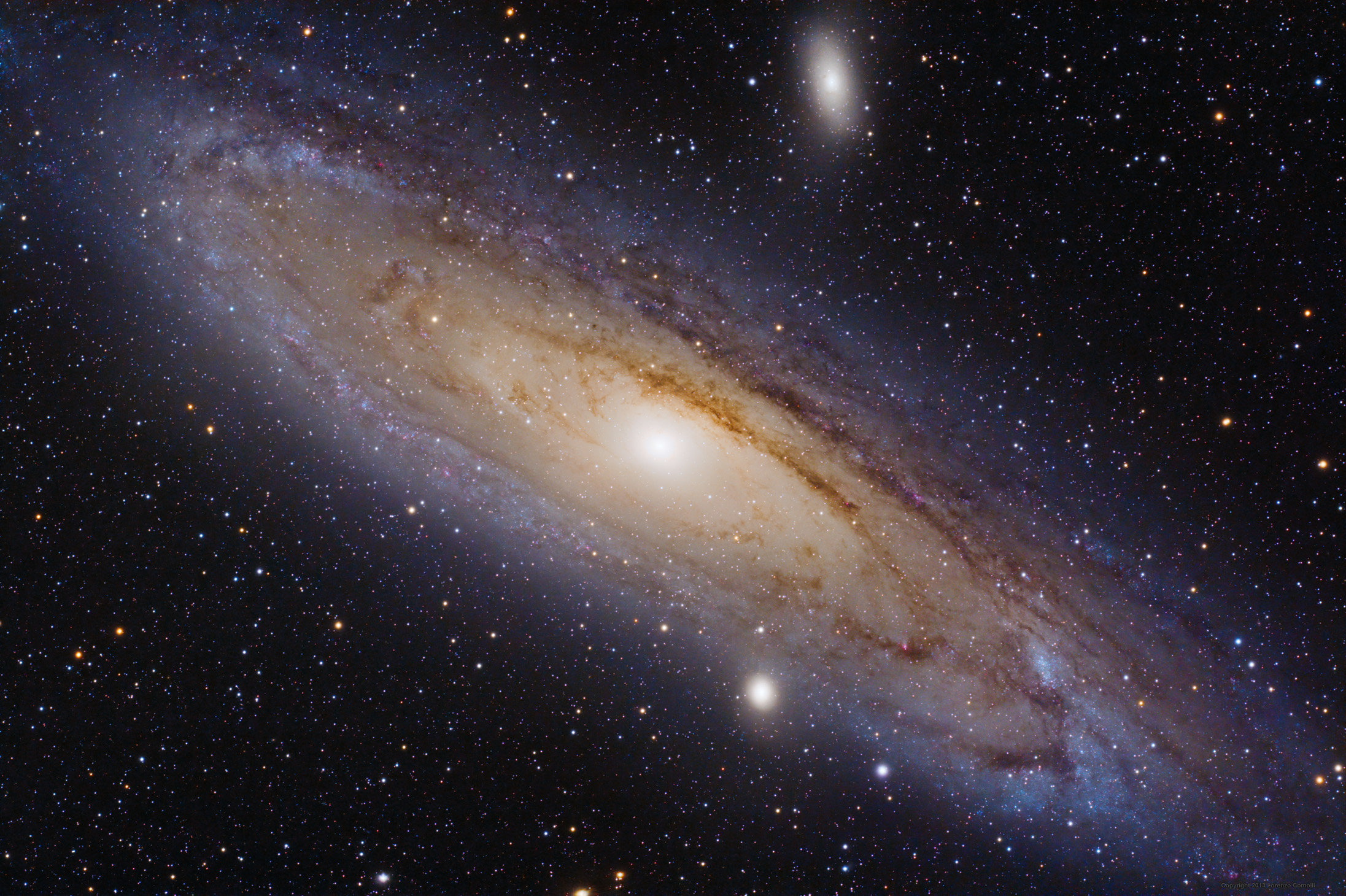
M31: The Andromeda Galaxy

Customized Star Charts Coming 1st Quarter 2027
We respect your privacy. Unsubscribe at any time.
'Quiet' pulsar suddenly reveals three glitches in 15 years of observations
Using more than 15 years of observations from the Parkes radio telescope, astronomers detected three rotational glitches in the pulsar PSR J1637−4642—a young neutron star that had shown no sign…
ReadSmall asteroid impact today over the ocean near Australia
A small asteroid impact will occur in the next few hours near NW Australia. The meteor should harmlessly burn up in Earth's atmosphere and poses no danger.
ReadThese microbes in Antarctica don’t live anywhere else
Researchers have discovered that some microbes in Antarctica are unique to the icy continent and are found nowhere else on Earth.
ReadLabor Day: Learn its history and traditions
Labor Day is a federal US holiday that falls on the 1st Monday in September and is considered the unofficial end of summer.
ReadThe Sky Today on Sunday, September 6: The Moon and Mars in Gemini
Looking for a sky event this week? Check out our full Sky This Week column. September 5: Titan near Saturn The waning crescent Moon lies in Gemini today, not far from the 3rd-magnit…
ReadFAST finds two mysterious hydrogen clouds with no visible stars
Astronomers have found two clouds of hydrogen near the Whirlpool galaxy that appear to contain almost no stars. The clouds, discovered with China's FAST radio telescope, each contain roughly 3 mill…
ReadA black hole as light as 40 tons can exist inside a star if dark matter helps
In 1974, Stephen Hawking made a prediction that transformed our understanding of black holes. Black holes, he showed, are not truly black: They slowly lose energy through a quantum process now know…
ReadSept. 5, 2001: The Milky Way has a black hole
NASA’s Chandra X-Ray Observatory is the agency’s flagship mission for X-ray astronomy. On Sept. 5, 2001, NASA announced that astronomers using Chandra in October of the previous year had witnes…
ReadThe Sky Today on Saturday, September 5: Titan near Saturn
Looking for a sky event this week? Check out our full Sky This Week column. September 4: Get in a workout Titan, Saturn’s brightest moon, orbits its parent world with a period of about 16 day…
Read