
The Rhythm of the Spheres
Reading the Night Sky
Wandering in Astronomy
The night sky is the oldest pattern of man, and every culture reads it differently. The stars above keep silent time, moving to a rhythm we are just now beginning to understand. Astronomy is where math, science, art, music, and words meet in a wondrous collision. In this section of our site, learn the basics of astronomy: from how a star chart is made, to projections and art that map the night sky, to how an astrolabe works just like it did thousands of years ago. Watch the North Star shift across centuries, explore how one sky has been mapped by many traditions, read what happened on this day in space, and see tonight’s moon for your location.
Map the Stars
The math behind star charts, with a projection explorer and a working astrolabe.
The Moving Sky
How the sky shifts across centuries, with a precession clock you can run.
The Traditions
One sky reads many ways, with a same-sky overlay of the world’s constellations.
This Day in the Stars
The sky’s events, discoveries, and lore tied to today’s date.
The Moon Tonight
Its phase and face, drawn live for where you’re standing.
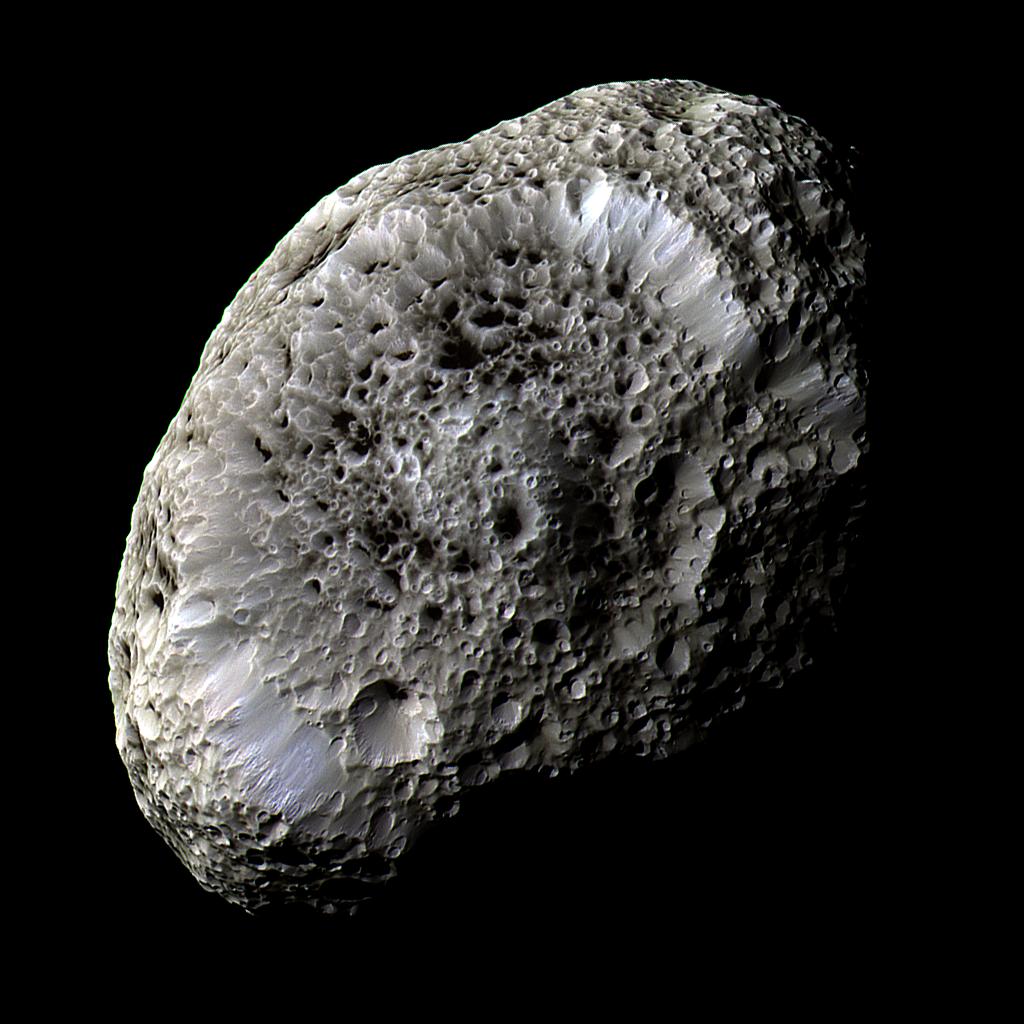
Saturn's Hyperion: A Moon with Odd Craters

Customized Star Charts Coming 1st Quarter 2027
We respect your privacy. Unsubscribe at any time.
The DESI legacy imaging survey releases the largest 2D map of the universe
In 2012, the Dark Energy Spectroscopic Instrument (DESI) was commissioned to measure the effect of dark energy, the mysterious force driving the expansion of the cosmos. Since then, the DESI Legacy…
ReadPair of white dwarfs locked in 6-minute orbit might one day be observed by gravitational waves
Current gravitational-wave observatories aren't sensitive enough to capture the gravitational waves of binary stars. They can only see the gravitational chirps of black holes just as they are mergi…
ReadRare pulsar unleashes 114 giant pulses in a single hour
Astronomers have detected extreme, never-before-seen behavior from a rare kind of pulsar and stumbled on a surprising link to one of astronomy's biggest current mysteries. Using 174 hours of radio …
ReadSept. 7, 1914: The birth of James Van Allen
James Van Allen, who was born in Iowa on Sept. 7, 1914, showed talent and interest in science and math from an early age. A major in physics from Wesleyan College in 1935 was followed by a Ph.D. in…
ReadWhy aren’t free-floating planets captured when they fly past stars?
Wouldn’t a free-floating planet eventually cross paths with a star or even a black hole and start revolving around it? YinToronto, Ontario Free-floating planets (FFPs) or rogue planets are bodies…
ReadReef fish survival threatened by motorboat noise
Reef fish exposed to motorboat noise can end up smaller and struggle to escape predators, says new research into dangerous underwater noise.
ReadSun news: Sun-stuff bursts could trigger strong auroras
Sun news September 7, 2026: A convoy of CMEs is racing our way. G1-G2 storms are likely, with G3 possible. Auroras may reach New York and London!
ReadThe Sky Today on Monday, September 7: Venus and Spica, side by side
Looking for a sky event this week? Check out our full Sky This Week column. September 6: The Moon and Mars in Gemini Venus has pulled away from the bright star Spica in Virgo, which…
ReadVisible planets and night sky guide for September
Visible planets and night sky guide: Tomorrow before sunrise, look for bright Jupiter near the thin crescent moon. This is a can’t-miss celestial event!
Read