
The Rhythm of the Spheres
Reading the Night Sky
Wandering in Astronomy
The night sky is the oldest pattern of man, and every culture reads it differently. The stars above keep silent time, moving to a rhythm we are just now beginning to understand. Astronomy is where math, science, art, music, and words meet in a wondrous collision. In this section of our site, learn the basics of astronomy: from how a star chart is made, to projections and art that map the night sky, to how an astrolabe works just like it did thousands of years ago. Watch the North Star shift across centuries, explore how one sky has been mapped by many traditions, read what happened on this day in space, and see tonight’s moon for your location.
Map the Stars
The math behind star charts, with a projection explorer and a working astrolabe.
The Moving Sky
How the sky shifts across centuries, with a precession clock you can run.
The Traditions
One sky reads many ways, with a same-sky overlay of the world’s constellations.
This Day in the Stars
The sky’s events, discoveries, and lore tied to today’s date.
The Moon Tonight
Its phase and face, drawn live for where you’re standing.
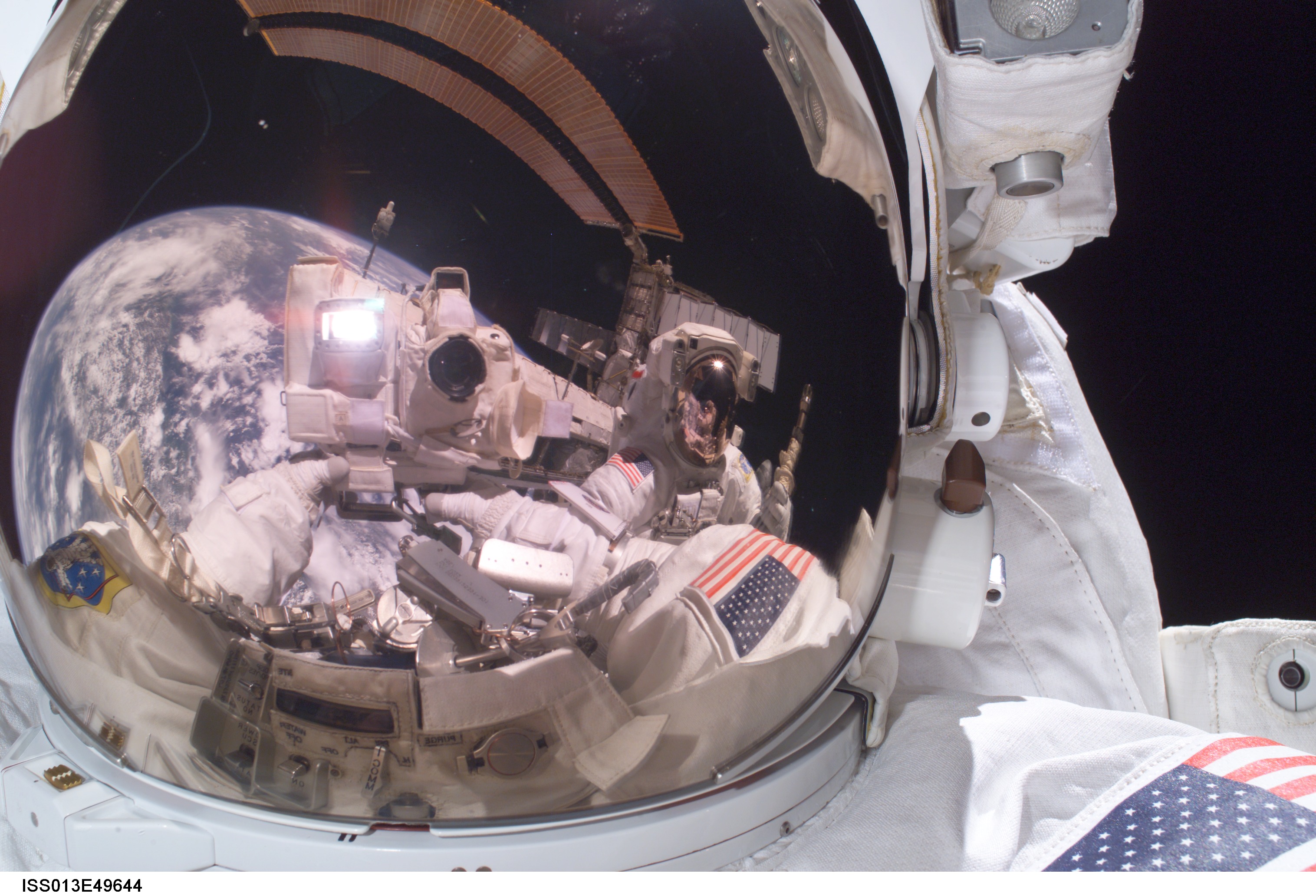
Reflections on Planet Earth

Customized Star Charts Coming 1st Quarter 2027
We respect your privacy. Unsubscribe at any time.
Why can’t I find the Big Dipper in September?
On northern autumn evenings, the famous Big Dipper lies low on - or even below - the northern horizon. You can use it to find Polaris, the North Star.
ReadFull moon names by the month and by the season
Lists of common full moon names — both by month and by season — for North America. And a word about full moon names in the Southern Hemisphere.
ReadThe Sky Today on Thursday, September 24: Blue Neptune, yellow star
Looking for a sky event this week? Check out our full Sky This Week column. September 23: Around Reiner Gamma Neptune stands close to a slightly fainter background star this evening…
ReadAstrophysicists use wave simulations to open a new window on dark matter
Astrophysicists from The University of Hong Kong (HKU), working with a research team led by Beijing Normal University (BNU), have developed a more physically realistic approach to testing how ultra…
ReadNASA's Hubble seeks lensed supernova, marks 200,000 orbits
NASA's Hubble Space Telescope completed its 200,000th orbit around Earth on Sept. 19, marking another milestone for an observatory that continues to transform our understanding of the universe.
ReadA wind-blown crescent
Aloke Palsikar, taken from Pie Town, New Mexico The Crescent Nebula (NGC 6888) is an emission nebula about 5,600 light-years away in Cygnus. Its distinctive shape was formed by fast stellar winds f…
ReadFinding light’s true nature
Light exhibits some of the strangest properties in our cosmos. It manifests as both a wave and a particle, and its speed in a vacuum is invariant. While physicists now fully grasp the way light int…
ReadBaby exoplanet: Astronomers find the youngest world yet
Astronomers have discovered the youngest-known exoplanet so far, Elias 2-24 b. The baby exoplanet is twice the mass of Jupiter and 450 light-years away.
Read