
The Rhythm of the Spheres
Reading the Night Sky
Wandering in Astronomy
The night sky is the oldest pattern of man, and every culture reads it differently. The stars above keep silent time, moving to a rhythm we are just now beginning to understand. Astronomy is where math, science, art, music, and words meet in a wondrous collision. In this section of our site, learn the basics of astronomy: from how a star chart is made, to projections and art that map the night sky, to how an astrolabe works just like it did thousands of years ago. Watch the North Star shift across centuries, explore how one sky has been mapped by many traditions, read what happened on this day in space, and see tonight’s moon for your location.
Map the Stars
The math behind star charts, with a projection explorer and a working astrolabe.
The Moving Sky
How the sky shifts across centuries, with a precession clock you can run.
The Traditions
One sky reads many ways, with a same-sky overlay of the world’s constellations.
This Day in the Stars
The sky’s events, discoveries, and lore tied to today’s date.
The Moon Tonight
Its phase and face, drawn live for where you’re standing.
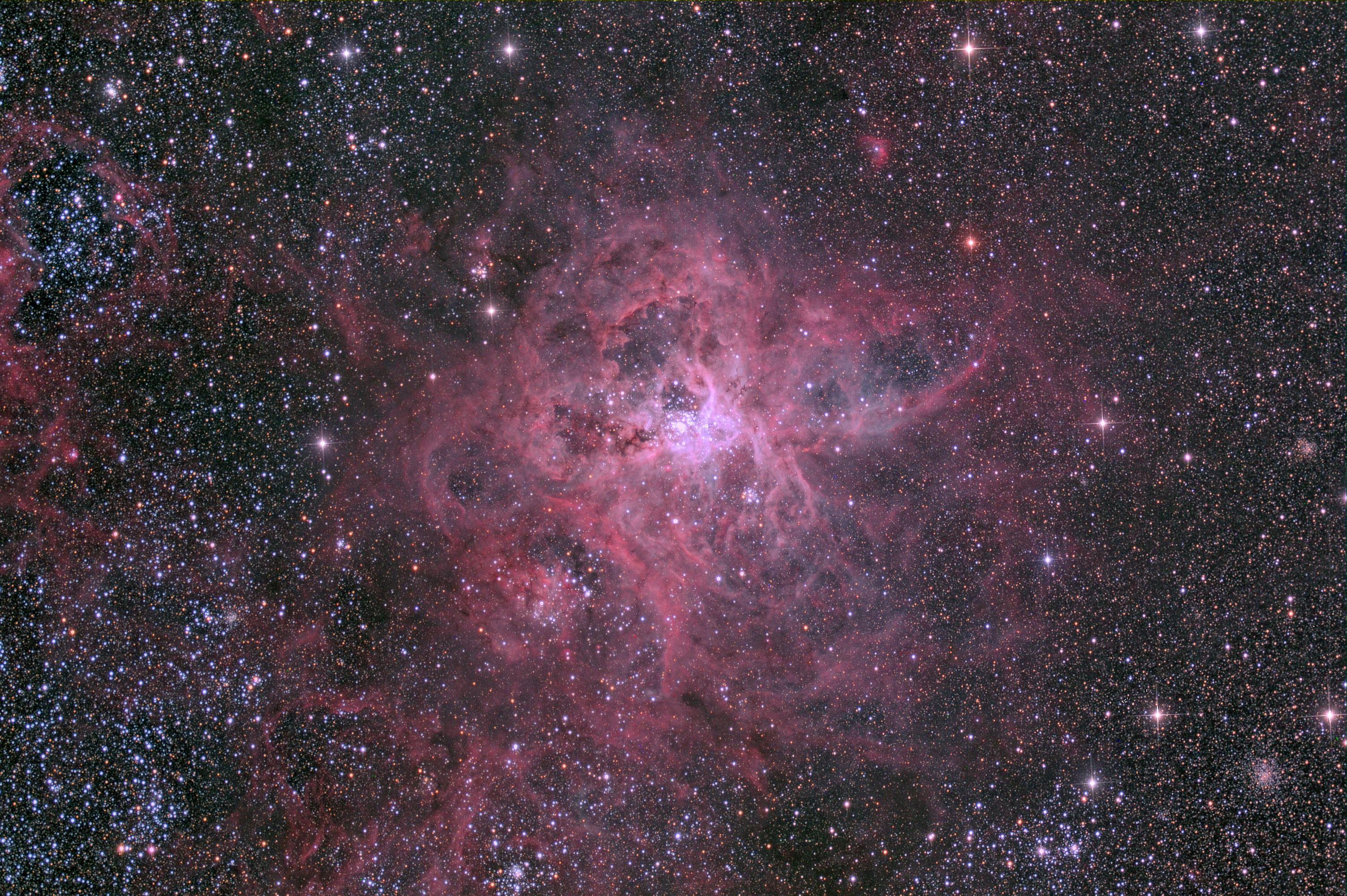
The Cosmic Web of the Tarantula Nebula

Customized Star Charts Coming 1st Quarter 2027
We respect your privacy. Unsubscribe at any time.
A tiny stellar system may be a 'satellite of a satellite'
Astronomers using data from the Euclid space telescope have discovered an exceptionally faint stellar system near the Fornax dwarf galaxy. Called Fornax-7, it appears to contain only about 170 time…
Read2026 Full Moon calendar: When to see the Full Moon and phases
The phenomenon of a Full Moon arises when our planet, Earth, is precisely sandwiched between the Sun and the Moon. This alignment ensures the entire side of the Moon that faces us gleams under sunl…
ReadSept. 28, 1969: The Murchison Meteorite explodes over Australia
At 10:58 AM on Sept. 28, 1969, residents of the small Australian farming community of Murchison, Victoria, heard a series of loud booms. The noise was accompanied by a strong smell and a streak of …
ReadThe Komodo dragon is the world’s largest living lizard
The Komodo dragon is the world’s largest lizard. It's a venomous predator that can hunt, swim between islands and reproduce without a mate.
ReadSun news: Fast solar wind fades, quiet sun returns
Sun news September 28, 2026: The coronal hole stream has faded, and the sun stayed quiet with only small C flares. Calm conditions should hold for a few days.
ReadVisible planets and night sky guide late September and October
Visible planets and night sky guide. Tonight, look for the bright waning gibbous moon near planet Saturn and the Pleiades star cluster.
ReadThe Sky Today on Monday, September 28: Open cluster M39 shines
Looking for a sky event this week? Check out our full Sky This Week column. September 27: Catch Saturn’s satellites Although the Moon still dominates much of the night, bright dee…
ReadAstronomers discover a radio galaxy with evidence of four separate jet outbursts
Astronomers have identified what may be the first example of a new class of radio galaxy, one whose central black hole appears to have launched powerful jets on four separate occasions. High-resolu…
ReadBlack hole jets reach far beyond galaxies' visible edges, potentially deciding their fate
Galaxies are enormous and hold hundreds of billions of stars. These stars form from cold, dense gas. Every large galaxy, including the Milky Way, is wrapped in a huge envelope of gas called the cir…
Read