

The Rhythm of the Spheres
Reading the Night Sky
Wandering in Astronomy
The night sky is the oldest pattern of man, and every culture reads it differently. The stars above keep silent time, moving to a rhythm we are just now beginning to understand. Astronomy is where math, science, art, music, and words meet in a wondrous collision. In this section of our site, learn the basics of astronomy: from how a star chart is made, to projections and art that map the night sky, to how an astrolabe works just like it did thousands of years ago. Watch the North Star shift across centuries, explore how one sky has been mapped by many traditions, read what happened on this day in space, and see tonight’s moon for your location.
Map the Stars
The math behind star charts, with a projection explorer and a working astrolabe.
The Moving Sky
How the sky shifts across centuries, with a precession clock you can run.
The Traditions
One sky reads many ways, with a same-sky overlay of the world’s constellations.
This Day in the Stars
The sky’s events, discoveries, and lore tied to today’s date.
The Moon Tonight
Its phase and face, drawn live for where you’re standing.
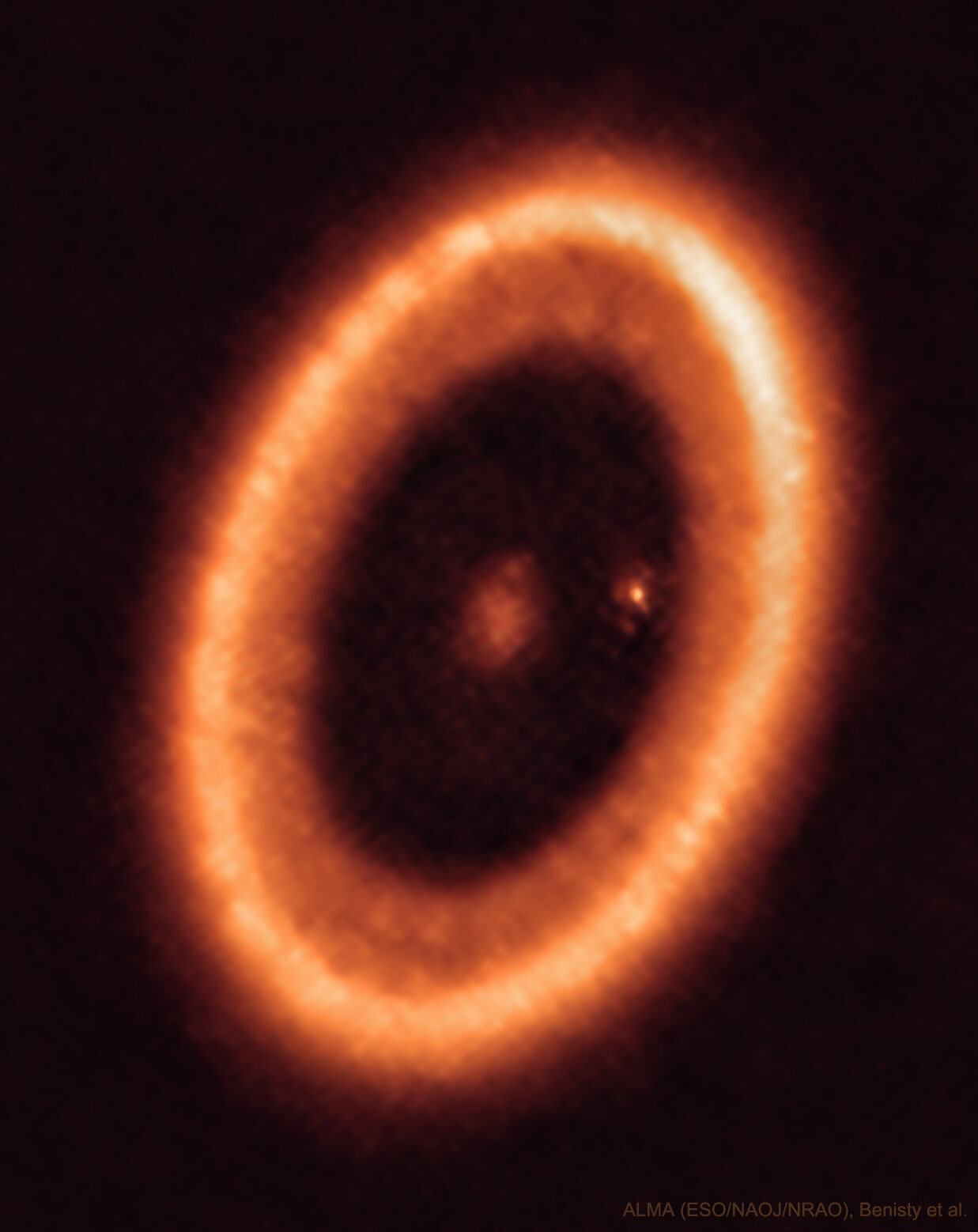
PDS 70: Disk, Planets, and Moons

Customized Star Charts Coming 1st Quarter 2027
We respect your privacy. Unsubscribe at any time.
Glorious Starship capture! SpaceX makes spaceflight history (again)
SpaceX has achieved its first Starship capture! The catching mechanism nicknamed Mechazilla grabbed Starship out of the air over Starbase in South Texas.
ReadThe Sky Today on Sunday, November 15: Mars and Jupiter in conjunction
Looking for a sky event this week? Check out our full Sky This Week column. November 14: Venus and Mercury in Virgo Jupiter and Mars are approaching opposition in February next year…
ReadIs this iconic black hole image accurate? New study delivers an independent result
On April 10, 2019, the Event Horizon Telescope (EHT) Collaboration revealed the first picture of a black hole. The object is at the center of a galaxy known as M87, about 55 million light-years away.
ReadA dead star is flashing radio waves every 8 minutes, and its partner looks a lot like the sun
Since 2022, astronomers have been puzzling over a new kind of cosmic object called long-period radio transients. These are objects that emit bright flashes of radio waves into space every few minut…
ReadA cosmic magnifying glass could reveal the same supernova two more times in roughly 70 years
Thanks to the gravitational lensing caused by a massive galaxy cluster and high-resolution images from the James Webb Space Telescope (JWST), astronomers discovered an exploding star when the unive…
ReadNov. 14, 2012: NASA announces an extended mission for Kepler
The Kepler Space Telescope, launched March 6, 2009, was designed to search the Milky Way for exoplanets. Using the transit method, Kepler ultimately observed over 500,00 stars and contributed to th…
ReadSun news: Hello, big newcomer sunspot!
Sun news November 14, 2026: Farewell, AR4566! A big new sunspot region is peeking over the sun’s northeast edge and has already fired the top flare.
ReadVisible planets and night sky guide for November
Visible planets and night sky guide: Tomorrow morning, look east for Jupiter and Mars at their closest on the sky's dome. They'll be just over a degree apart!
ReadThe Sky Today on Saturday, November 14: Venus and Mercury in Virgo
Looking for a sky event this week? Check out our full Sky This Week column. November 13: Spot Mirach’s Ghost Following inferior conjunction early this month, Mercury has reappeared in the mor…
Read