

The Rhythm of the Spheres
Reading the Night Sky
Wandering in Astronomy
The night sky is the oldest pattern of man, and every culture reads it differently. The stars above keep silent time, moving to a rhythm we are just now beginning to understand. Astronomy is where math, science, art, music, and words meet in a wondrous collision. In this section of our site, learn the basics of astronomy: from how a star chart is made, to projections and art that map the night sky, to how an astrolabe works just like it did thousands of years ago. Watch the North Star shift across centuries, explore how one sky has been mapped by many traditions, read what happened on this day in space, and see tonight’s moon for your location.
Map the Stars
The math behind star charts, with a projection explorer and a working astrolabe.
The Moving Sky
How the sky shifts across centuries, with a precession clock you can run.
The Traditions
One sky reads many ways, with a same-sky overlay of the world’s constellations.
This Day in the Stars
The sky’s events, discoveries, and lore tied to today’s date.
The Moon Tonight
Its phase and face, drawn live for where you’re standing.
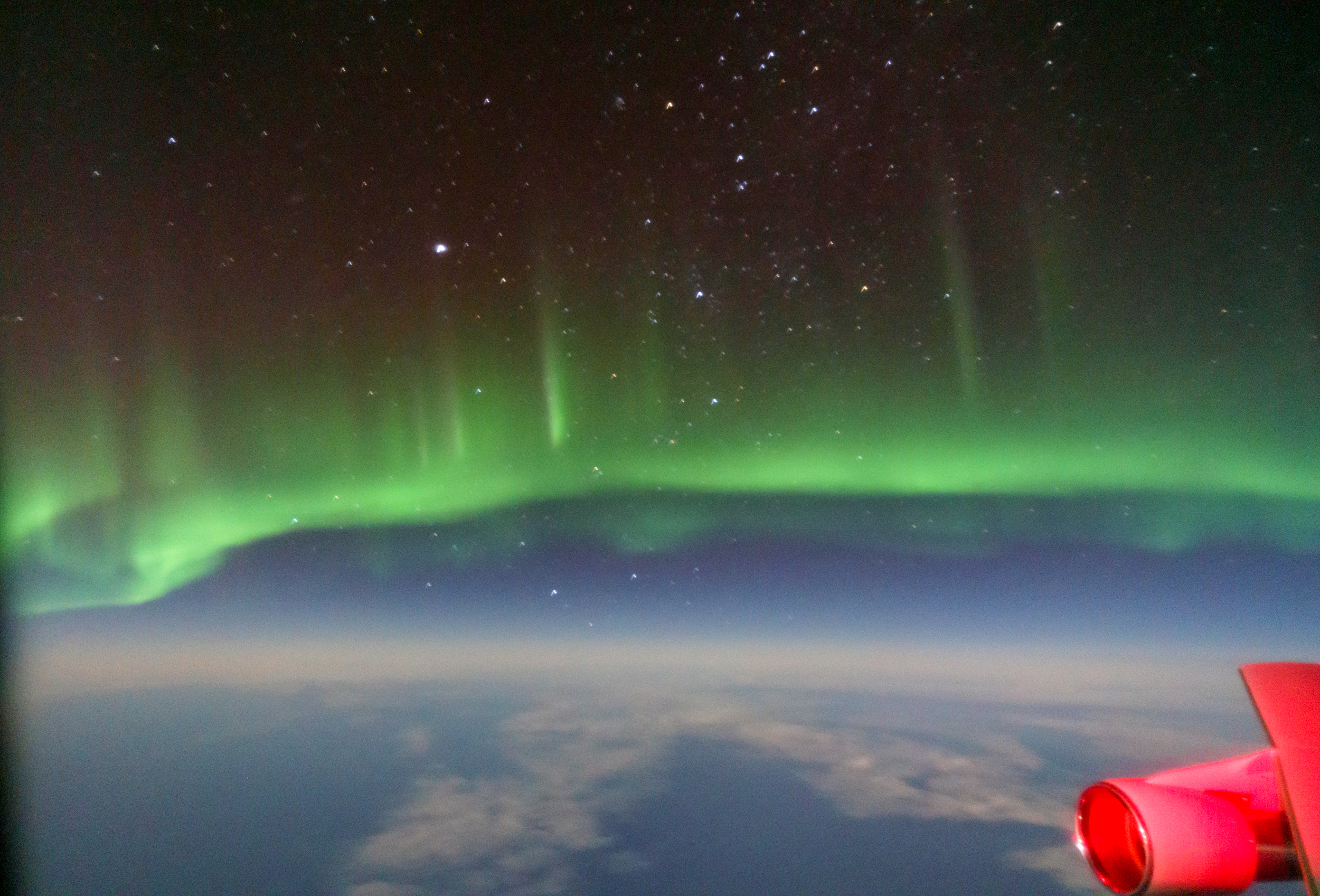
SOFIA's Southern Lights

Customized Star Charts Coming 1st Quarter 2027
We respect your privacy. Unsubscribe at any time.
Hubble offers cosmic sampler of targets for Roman
A gallery of gravitational lenses captured by NASA's Hubble Space Telescope showcases the diversity of this cosmic phenomenon and lays the groundwork for follow-up observations by the new Nancy Gra…
ReadSpace telescope Euclid sets the new standard for cosmology
On July 1, 2023, the European Space Agency (ESA) launched the Euclid space telescope into space. Its mission: to create the largest and most detailed map of the universe ever made.
ReadA rare star system emits radio signals every 8 minutes
Scientists at the Curtin University node at the International Center for Radio Astronomy Research (ICRAR) have linked mysterious radio pulses to an unusual pairing of stars—a dead star that spins…
ReadNov. 12, 2014: The Philae lander touches down on a comet
The European Space Agency’s Rosetta mission launched March 2, 2004, on a 4-billion-mile (6.4 billion kilometers) path to Comet 67P/Churyumov-Gerasimenko. The mission consisted of the Rosetta orbi…
Read2026 Full Moon calendar: When to see the Full Moon and phases
The phenomenon of a Full Moon arises when our planet, Earth, is precisely sandwiched between the Sun and the Moon. This alignment ensures the entire side of the Moon that faces us gleams under sunl…
ReadVisible planets and night sky guide for November
Visible planets and night sky guide: Look west shortly after sunset to see earthshine on the crescent moon. And watch a video here about the Leonid meteors.
Read‘Rosetta Stone for Mars:’ Martian meteorite hints at ancient life
A rare 4.1-billion-year-old Martian meteorite, Teghaza 001, provides new clues about Mars' ancient and more habitable past.
ReadIs there a North Star for Mars?
Is there a North Star for Mars ... a guide star for future explorers? Not in any satisfying way. But Martian stargazers wouldn't lack for things to see!
ReadThe Sky Today on Thursday, November 12: An open cluster in Perseus
Looking for a sky event this week? Check out our full Sky This Week column. November 11: Venus comes to a halt The constellation Perseus is famous for its bright Double Cluster, but…
Read