

The Rhythm of the Spheres
Reading the Night Sky
Wandering in Astronomy
The night sky is the oldest pattern of man, and every culture reads it differently. The stars above keep silent time, moving to a rhythm we are just now beginning to understand. Astronomy is where math, science, art, music, and words meet in a wondrous collision. In this section of our site, learn the basics of astronomy: from how a star chart is made, to projections and art that map the night sky, to how an astrolabe works just like it did thousands of years ago. Watch the North Star shift across centuries, explore how one sky has been mapped by many traditions, read what happened on this day in space, and see tonight’s moon for your location.
Map the Stars
The math behind star charts, with a projection explorer and a working astrolabe.
The Moving Sky
How the sky shifts across centuries, with a precession clock you can run.
The Traditions
One sky reads many ways, with a same-sky overlay of the world’s constellations.
This Day in the Stars
The sky’s events, discoveries, and lore tied to today’s date.
The Moon Tonight
Its phase and face, drawn live for where you’re standing.
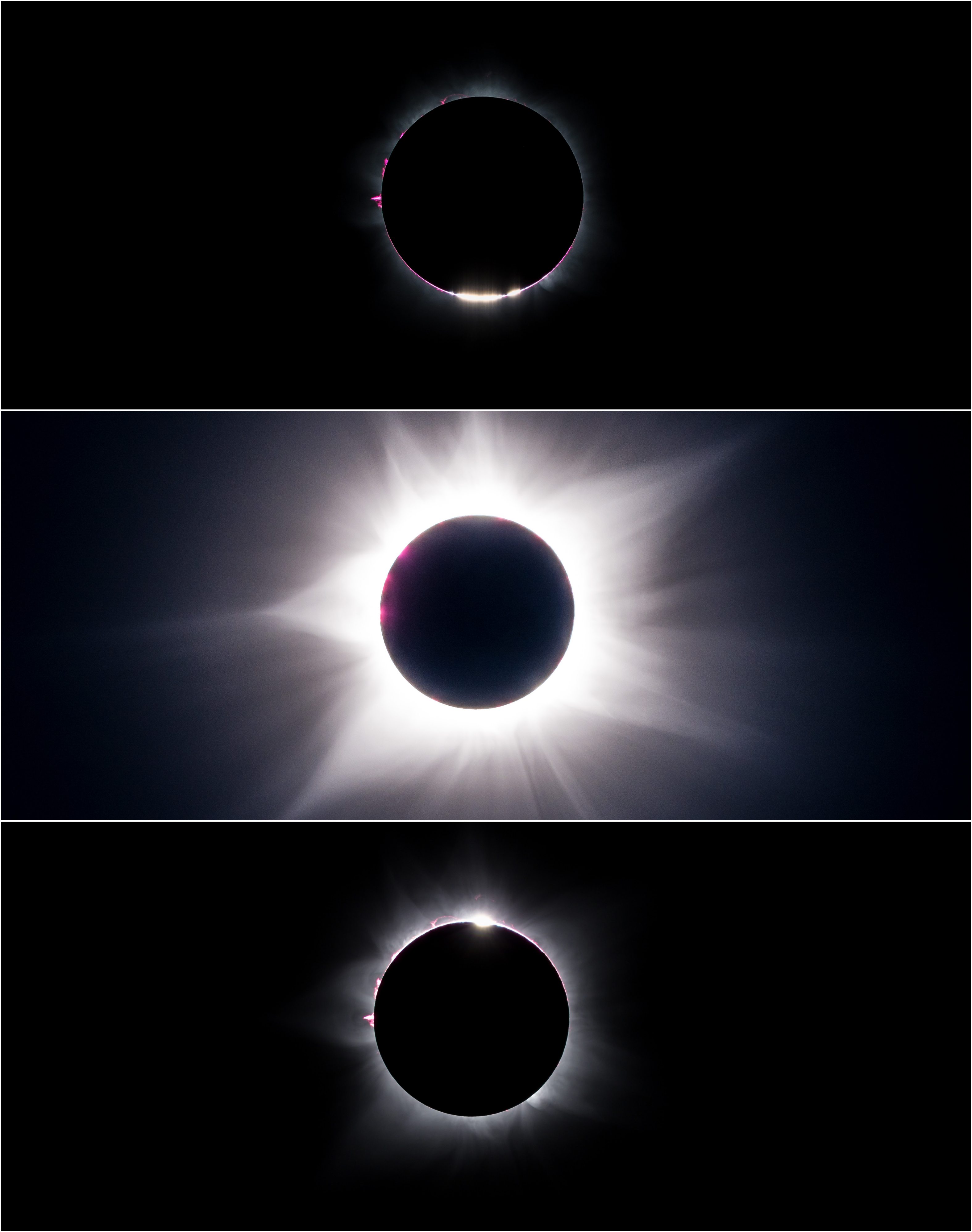
Solar Eclipse from Western Australia
Total Solar Eclipse of 2023 April Gallery: Notable Submissions to APOD
Watch: Planet Earth's annual Lyrid Meteor Shower

Customized Star Charts Coming 1st Quarter 2027
We respect your privacy. Unsubscribe at any time.
Nov. 10, 1861: The birth of Robert Innes
Born Nov. 10, 1861, in Scotland, Robert Thorburn Ayton Innes would reshape our understanding of our cosmic neighborhood when he discovered our nearest stellar neighbor, Proxima Centauri, in 1912. I…
Read2026 Full Moon calendar: When to see the Full Moon and phases
The phenomenon of a Full Moon arises when our planet, Earth, is precisely sandwiched between the Sun and the Moon. This alignment ensures the entire side of the Moon that faces us gleams under sunl…
ReadAtmosphere of lava planet: ‘A cloudy, reflective sunscreen’
New observations of super-Earth TOI-561 b by the Webb telescope show again that the atmosphere of lava planet TOI-561 b does exist, and is very reflective.
ReadSun news: Powerful sunspot region facing Earth
Sun news November 10, 2026: Sunspot AR4566 faces Earth and fired 18 C flares over the past day. Could it send an eruption our way?
ReadVisible planets and night sky guide for November
Visible planets and night sky guide: Look for bright Jupiter and red Mars! They are getting closer each day and will appear closest together on November 15–17.
ReadThe Sky Today on Tuesday, November 10: Seek Saturn’s two-toned moon
Looking for a sky event this week? Check out our full Sky This Week column. November 9: Chase Comet 161P/Hartley-IRAS Challenge yourself to pick up Saturn’s moon Iapetus, which to…
ReadThe ELT can probe ultra-diffuse galaxies and their dark matter mysteries
We've been waiting a long time for the Extremely Large Telescope's first light, scheduled for March 2029. Telescopes this large, powerful and costly always have multiple science goals, and that's t…
ReadA stellar odd couple at an unusual stage of evolution
Most of the stars in the Milky Way are what we might call normal stars. They're main sequence stars like our sun, meaning they're doing what most people probably think stars do: shining as they fus…
ReadThe supernova impostor: Chandra finds likely source of giant star's repeated outbursts
Using NASA's Chandra X-ray Observatory, astronomers have discovered what is triggering repeated outbursts from a giant, unstable star.
Read