

The Rhythm of the Spheres
Reading the Night Sky
Wandering in Astronomy
The night sky is the oldest pattern of man, and every culture reads it differently. The stars above keep silent time, moving to a rhythm we are just now beginning to understand. Astronomy is where math, science, art, music, and words meet in a wondrous collision. In this section of our site, learn the basics of astronomy: from how a star chart is made, to projections and art that map the night sky, to how an astrolabe works just like it did thousands of years ago. Watch the North Star shift across centuries, explore how one sky has been mapped by many traditions, read what happened on this day in space, and see tonight’s moon for your location.
Map the Stars
The math behind star charts, with a projection explorer and a working astrolabe.
The Moving Sky
How the sky shifts across centuries, with a precession clock you can run.
The Traditions
One sky reads many ways, with a same-sky overlay of the world’s constellations.
This Day in the Stars
The sky’s events, discoveries, and lore tied to today’s date.
The Moon Tonight
Its phase and face, drawn live for where you’re standing.
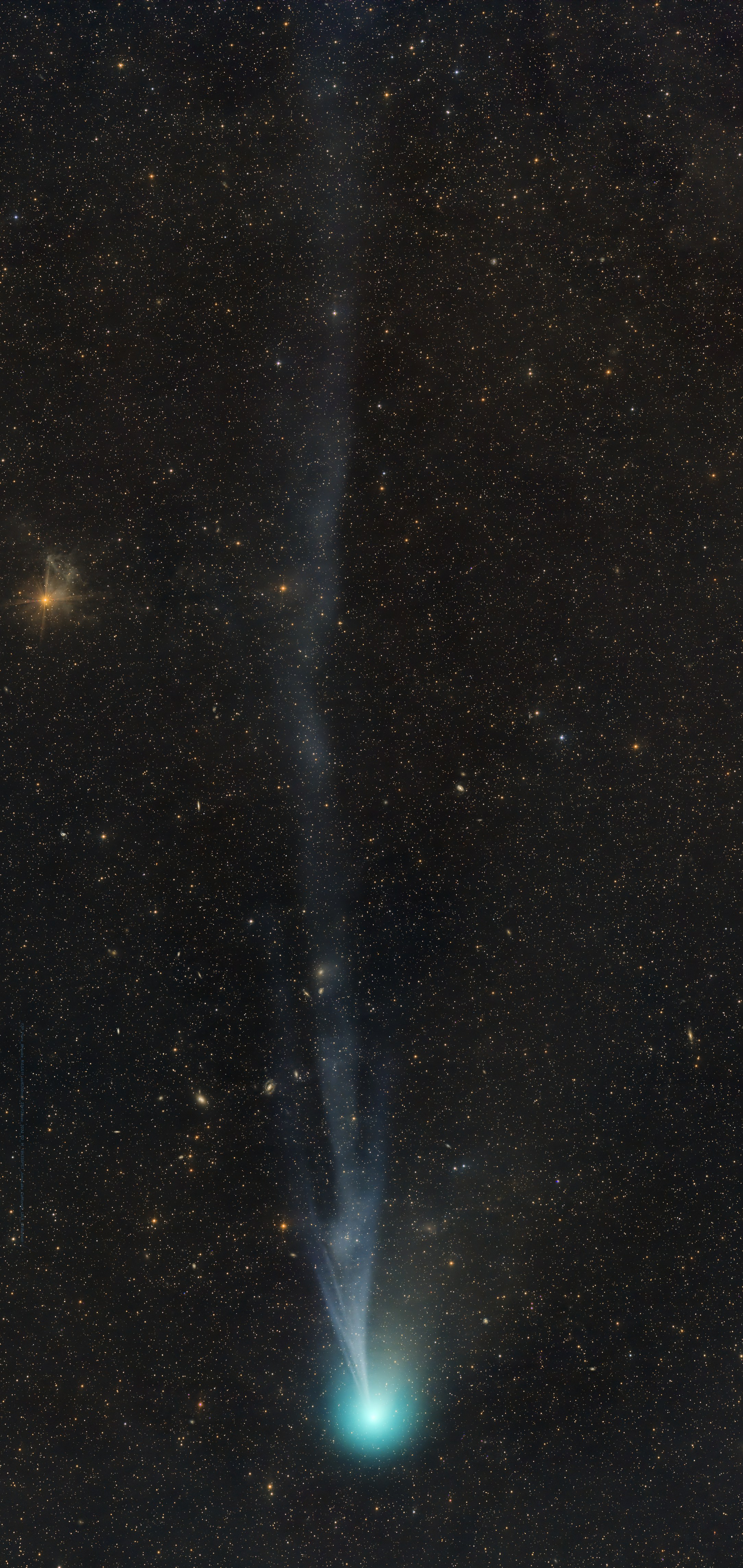
Structure in the Tail of Comet 12P/Pons-Brooks

Customized Star Charts Coming 1st Quarter 2027
We respect your privacy. Unsubscribe at any time.
The constellation Andromeda the Chained Lady
The constellation Andromeda the Chained Lady is most famous for containing M31, the Andromeda Galaxy, the closest large spiral galaxy to the Milky Way.
ReadThe Sky Today on Friday, November 6: Nab the North America Nebula
Looking for a sky event this week? Check out our full Sky This Week column. November 5: Smoke out the Southern Cigar As fall gets into full swing, we are seeing less of the summerti…
ReadJupiter occulted
Katelyn Beecroft from London, Ontario, Canada On the morning of Oct. 6, 2026, the waning crescent Moon — then about 20 percent lit — occulted Jupiter as seen from much of eastern North America.…
ReadThe Sky This Week from November 6 to 13: Venus in the spotlight
Friday, November 6The waning Moon leaves us with perfect skies for deep-sky observing. Let’s kick off the week with a bright planetary nebula in Aquarius: NGC 7293, commonly known as the Helix Ne…
ReadAstronomers deliver the sharpest and deepest view yet of the low-frequency radio sky
Using the Low Frequency Array (LOFAR), an international team led by Leiden University has produced the sharpest and most sensitive radio image of the sky ever made at low radio frequencies. The ima…
ReadConnecting artificial intelligence with the tools of astrophysical research
Investigating a scientific question is often a complex process. As an astrophysicist studying some of the most energetic phenomena in the universe, I know that finding answers requires much more th…
ReadHubble learns galactic history from stars
This NASA/ESA Hubble Space Telescope image provides a lesson in galactic history. The sparkling collection of stars is named Messier 30 (M30) after the French astronomer Charles Messier, who catalo…
ReadHera mission gets its 1st closeup view of Didymos and Dimorphos
The Hera mission just got its 1st closeup view of Didymos and its little moonlet Dimorphos. Soon it will begin investigating the aftermath of the DART impact.
ReadSwift spacecraft fell back to Earth in a fiery blaze yesterday
The Swift spacecraft fell back to Earth as a fiery streak of light yesterday. See videos here of the blazing reentry into Earth's atmosphere.
Read