

The Rhythm of the Spheres
Reading the Night Sky
Wandering in Astronomy
The night sky is the oldest pattern of man, and every culture reads it differently. The stars above keep silent time, moving to a rhythm we are just now beginning to understand. Astronomy is where math, science, art, music, and words meet in a wondrous collision. In this section of our site, learn the basics of astronomy: from how a star chart is made, to projections and art that map the night sky, to how an astrolabe works just like it did thousands of years ago. Watch the North Star shift across centuries, explore how one sky has been mapped by many traditions, read what happened on this day in space, and see tonight’s moon for your location.
Map the Stars
The math behind star charts, with a projection explorer and a working astrolabe.
The Moving Sky
How the sky shifts across centuries, with a precession clock you can run.
The Traditions
One sky reads many ways, with a same-sky overlay of the world’s constellations.
This Day in the Stars
The sky’s events, discoveries, and lore tied to today’s date.
The Moon Tonight
Its phase and face, drawn live for where you’re standing.
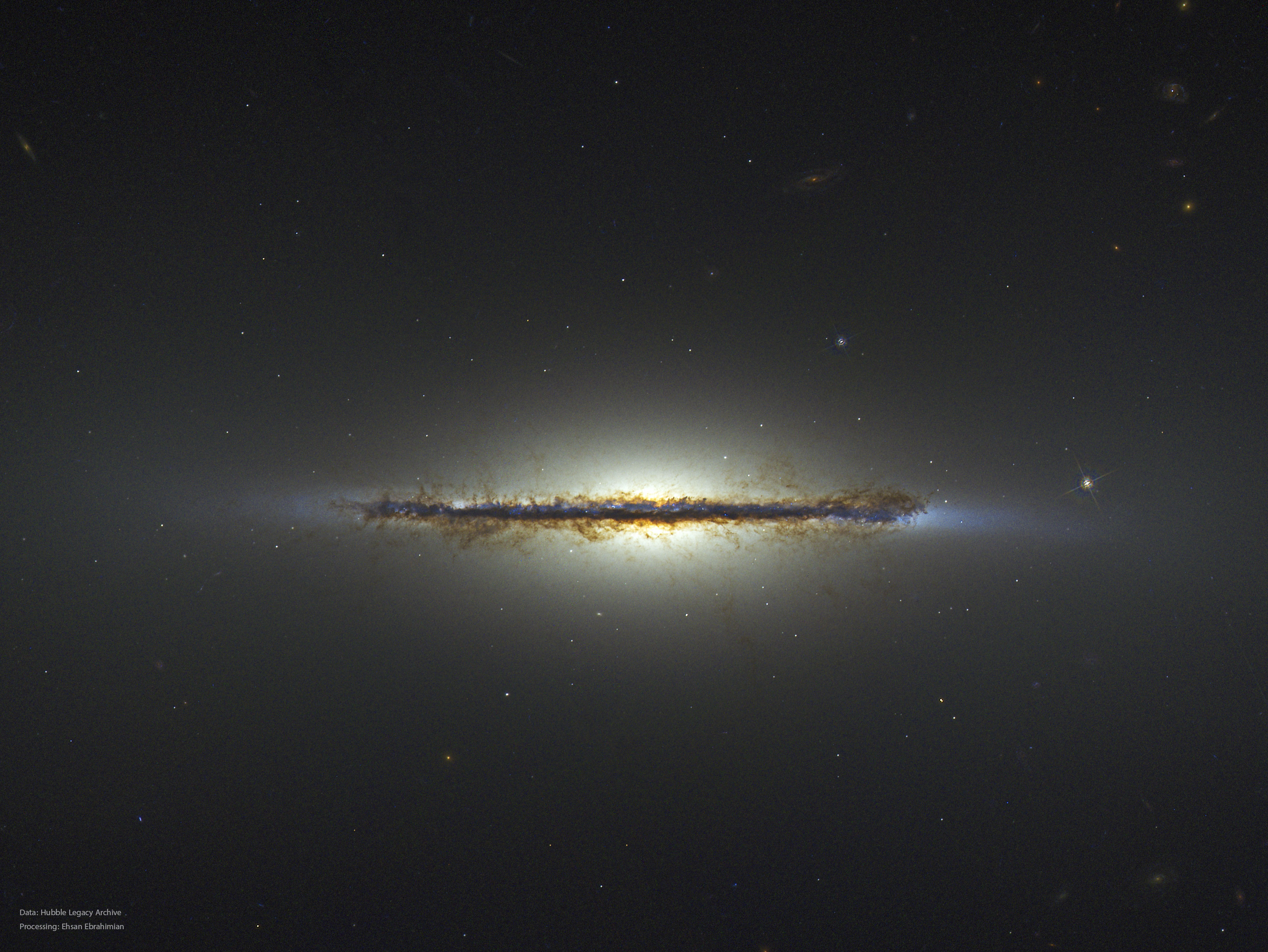
M102: Edge-on Disk Galaxy

Customized Star Charts Coming 1st Quarter 2027
We respect your privacy. Unsubscribe at any time.
The Sky Today on Thursday, November 5: Smoke out the Southern Cigar
Looking for a sky event this week? Check out our full Sky This Week column. November 4: Venus and Spica stand close Tonight’s target is a bit of a test: How far south can you see?…
ReadCosmic hydrogen measurement marks breakthrough in mapping the universe
An international research project is bringing scientists closer to mapping the universe. The MeerKLASS Collaboration has reported its first measurement of the large-scale clustering of cosmic hydro…
ReadA cosmic 'leaf blower': Light-propelled winds help explain early universe's bright galaxies
When astronomers looked at photos of the early universe taken by the James Webb Space Telescope, they found something odd: an overabundance of bright galaxies. Based on what they knew about the ear…
ReadVan Gogh’s Starry Night shows a real night sky, study suggests
For decades, art historians and astronomers have wondered whether the sky of Vincent van Gogh’s The Starry Night shows real stars or imagined ones. A new study argues the stars are real — and t…
ReadSatellites leak noise that interferes with telescopes and GPS. Here's how to fix it
Less than a decade ago, there were about 2,000 operational satellites orbiting Earth. Today there are more than 15,000. Millions more are planned.
ReadA cosmic pond
Massimo Tamajo from Syracuse, Sicily, Italy IC 410 is an emission nebula about 12,000 light-years away in Auriga, lit by the radiation from the embedded star cluster NGC 1893. The region is best kn…
ReadSwift spacecraft fell back to Earth in a fiery blaze on Wednesday
The Swift spacecraft fell back to Earth as a fiery streak of light on Wednesday. See videos here of the blazing reentry into Earth's atmosphere.
ReadA new mini-moon for Earth! Meet 2026 QQ8
Earth has another new mini-moon! The little space rock 2026 QQ8 began orbiting Earth in April and will stay through 2026.
ReadCrew emerges from Mars habitat simulation after yearlong test
On October 31, 2026, 4 participants in NASA's Mars habitat simulation emerged after 1 year of testing for what astronauts might encounter on a visit to Mars.
Read