

The Rhythm of the Spheres
Reading the Night Sky
Wandering in Astronomy
The night sky is the oldest pattern of man, and every culture reads it differently. The stars above keep silent time, moving to a rhythm we are just now beginning to understand. Astronomy is where math, science, art, music, and words meet in a wondrous collision. In this section of our site, learn the basics of astronomy: from how a star chart is made, to projections and art that map the night sky, to how an astrolabe works just like it did thousands of years ago. Watch the North Star shift across centuries, explore how one sky has been mapped by many traditions, read what happened on this day in space, and see tonight’s moon for your location.
Map the Stars
The math behind star charts, with a projection explorer and a working astrolabe.
The Moving Sky
How the sky shifts across centuries, with a precession clock you can run.
The Traditions
One sky reads many ways, with a same-sky overlay of the world’s constellations.
This Day in the Stars
The sky’s events, discoveries, and lore tied to today’s date.
The Moon Tonight
Its phase and face, drawn live for where you’re standing.
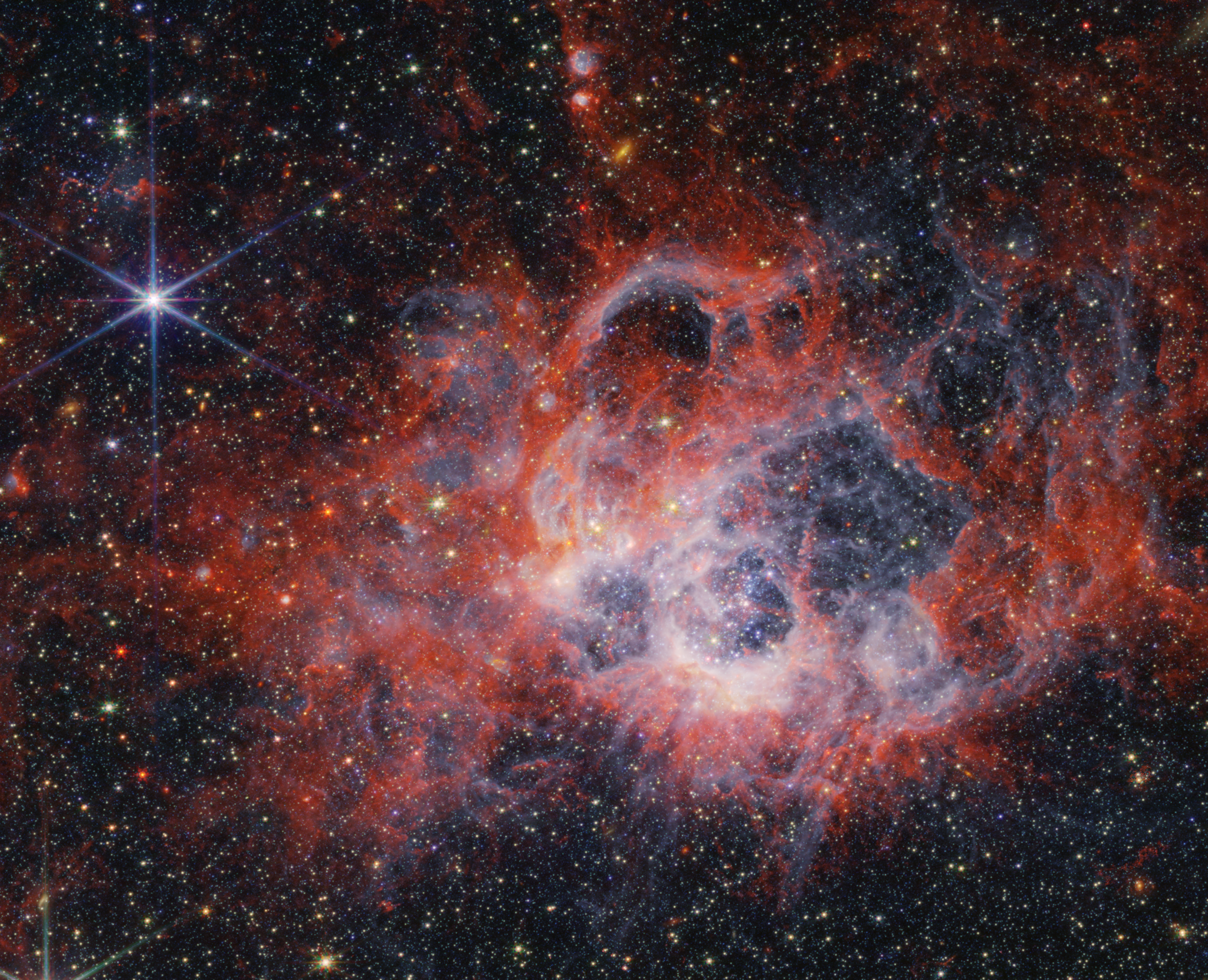
NGC 604: Giant Stellar Nursery

Customized Star Charts Coming 1st Quarter 2027
We respect your privacy. Unsubscribe at any time.
November 2026: What’s in the sky this month?
Saturn is already visible as darkness falls; some challenging transits of its moons occur this month. Neptune is a binocular object close to Saturn, while Uranus is an easy target in Taurus. A Full…
ReadNovember 2026: What’s in the Southern Hemisphere sky this month?
Although Venus has dominated the evening sky since last summer, its long apparition came to an end at inferior conjunction in late October. That leaves Saturn as the only naked-eye planet visible a…
ReadSun news: Halloween 2003 was a scary time to be a satellite
Sun news October 31, 2026: Satellite crews were counting damage from the Halloween storms 23 years ago today. Tonight brings a gentler treat: auroras!
ReadVisible planets and night sky guide for October and November
Visible planets and night sky guide. Halloween is an astronomical holiday! See a video about it here. Tomorrow, watch for the 3rd quarter moon.
ReadThe Sky Today on Saturday, October 31: Glimpse the ghostly Phantom Galaxy
Looking for a sky event this week? Check out our full Sky This Week column. October 30: Mars approaches Leo Let’s send off spooky season on a high note this Halloween with M74, also known as …
ReadFiguring out where cosmic neutrinos come from is tricky—radio telescopes could help find 'ghost particles' origin
Neutrinos are funny little particles that weigh almost nothing, making them one of the universe's most elusive building blocks. They can come from objects as mundane as bananas and as exotic as sup…
ReadTiny photonic chip links telescopes together to view the universe in 'astonishing' detail
A tiny glass chip developed by researchers at Heriot-Watt University has linked two telescopes together to enable them to act as a single powerful instrument, marking an important step toward a new…
ReadA gamma-ray powerhouse's smoking gun? Gas trail points to microquasar jets
In 2016, a binary star system emitting unusually strong gamma rays was discovered in our galactic neighborhood. Now, astronomers have found the smoking gun, or rather, a smoking trail of cool molec…
ReadNew dwarf planet discovered by Rubin?
Astronomers using the Rubin Observatory have discovered a new dwarf planet candidate. It lies just beyond the orbit of Pluto.
Read