

The Rhythm of the Spheres
Reading the Night Sky
Wandering in Astronomy
The night sky is the oldest pattern of man, and every culture reads it differently. The stars above keep silent time, moving to a rhythm we are just now beginning to understand. Astronomy is where math, science, art, music, and words meet in a wondrous collision. In this section of our site, learn the basics of astronomy: from how a star chart is made, to projections and art that map the night sky, to how an astrolabe works just like it did thousands of years ago. Watch the North Star shift across centuries, explore how one sky has been mapped by many traditions, read what happened on this day in space, and see tonight’s moon for your location.
Map the Stars
The math behind star charts, with a projection explorer and a working astrolabe.
The Moving Sky
How the sky shifts across centuries, with a precession clock you can run.
The Traditions
One sky reads many ways, with a same-sky overlay of the world’s constellations.
This Day in the Stars
The sky’s events, discoveries, and lore tied to today’s date.
The Moon Tonight
Its phase and face, drawn live for where you’re standing.
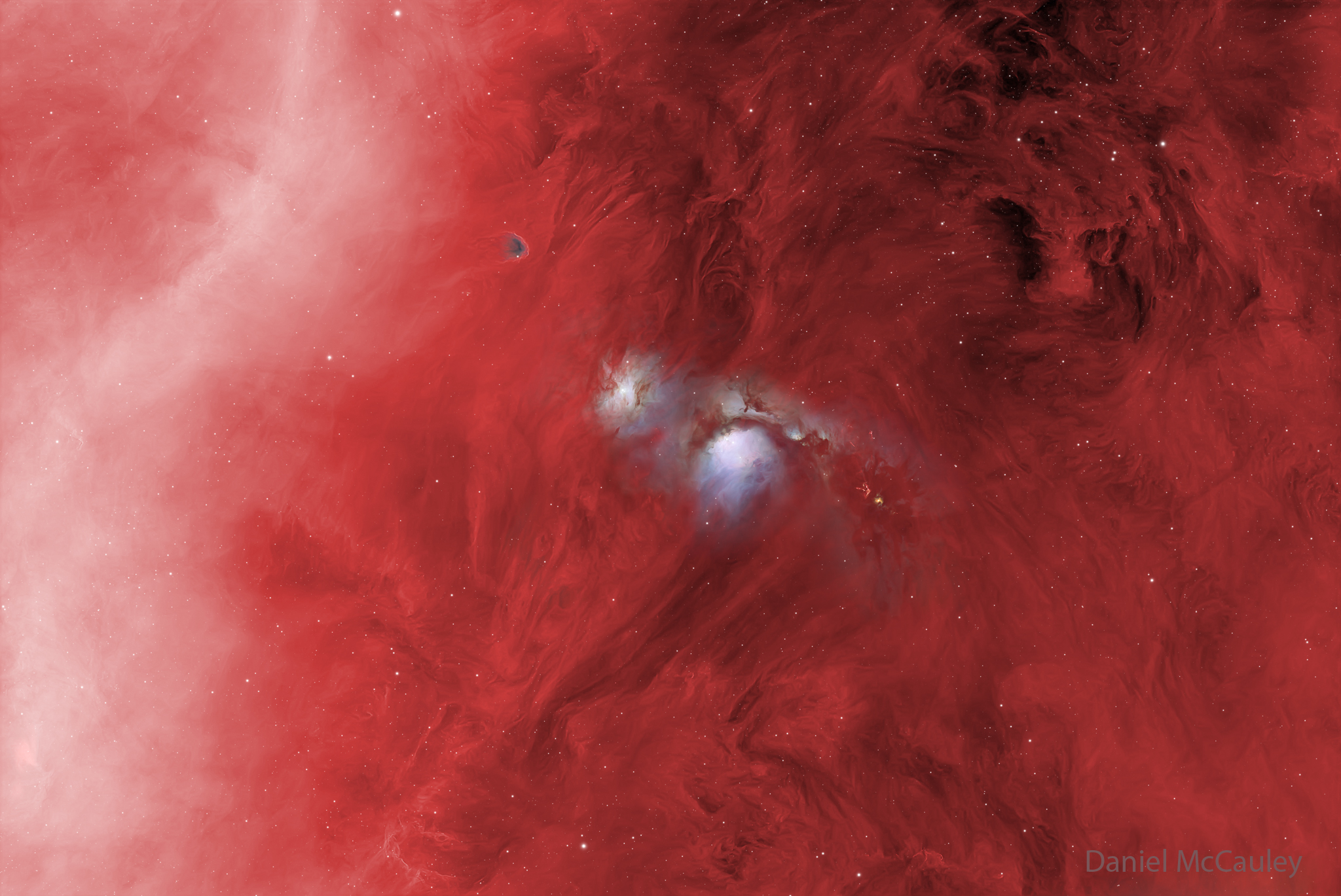
M78: Reflecting Blue in a Sea of Red
Almost Hyperspace: Random APOD Generator

Customized Star Charts Coming 1st Quarter 2027
We respect your privacy. Unsubscribe at any time.
Theory predicting an older universe without dark matter or dark energy passes key cosmological tests
An alternative model in which the universe is 26.7 billion years old and needs neither dark matter nor dark energy has held up against several major cosmology tests, according to a new University o…
ReadNov. 7, 1882: A Great Comet transforms astrophotography
In early September 1882, a comet was sighted from the Cape of Good Hope in South Africa. The comet brightened over the following weeks, reaching a magnitude of -2 on the 15th; at perihelion two day…
ReadSun news: Fast solar wind is headed Earth’s way
Sun news November 7, 2026: Fast wind from a huge coronal hole is reaching Earth. G1 to G2 storms are possible this weekend. Aurora hunters, get ready!
ReadVisible planets and night sky guide for November
Visible planets and night sky guide. Mars and Jupiter are getting closer together! Watch them this week. Saturn will be visible all month in the evening sky.
ReadThe Sky Today on Saturday, November 7: Venus meets the Moon
Looking for a sky event this week? Check out our full Sky This Week column. November 6: Nab the North America Nebula Venus is already primed to capture attention above the eastern horizon befor…
ReadUntangling the patterns of the cosmic microwave background to better understand the early universe
A figure in red trudges across a blanket of white. Snow squeaks under the scientist's feet, too dry to be slick or soft. Only a line of flags and a few large buildings—the scientist's destination…
ReadVibrating mirrors of light create analog of a black hole event horizon
Optical cavities are pairs of light-trapping mirrors and underpin the operation of lasers, atomic clocks and many types of precision sensors. If the distance between the mirrors is changed rapidly …
ReadNov. 6, 1919: Einstein is right
The earliest test of Albert Einstein’s general theory of relativity took place just four years after he published it. During the May 29, 1919, total solar eclipse, British astronomer Sir Arthur E…
ReadActive volcanoes on Mars? Noxious gas discovery says — maybe
Are there still active volcanoes on Mars? New detections of hydrogen chloride from below the surface suggest flowing magma.
Read