
The Rhythm of the Spheres
Reading the Night Sky
Wandering in Astronomy
The night sky is the oldest pattern of man, and every culture reads it differently. The stars above keep silent time, moving to a rhythm we are just now beginning to understand. Astronomy is where math, science, art, music, and words meet in a wondrous collision. In this section of our site, learn the basics of astronomy: from how a star chart is made, to projections and art that map the night sky, to how an astrolabe works just like it did thousands of years ago. Watch the North Star shift across centuries, explore how one sky has been mapped by many traditions, read what happened on this day in space, and see tonight’s moon for your location.
Map the Stars
The math behind star charts, with a projection explorer and a working astrolabe.
The Moving Sky
How the sky shifts across centuries, with a precession clock you can run.
The Traditions
One sky reads many ways, with a same-sky overlay of the world’s constellations.
This Day in the Stars
The sky’s events, discoveries, and lore tied to today’s date.
The Moon Tonight
Its phase and face, drawn live for where you’re standing.
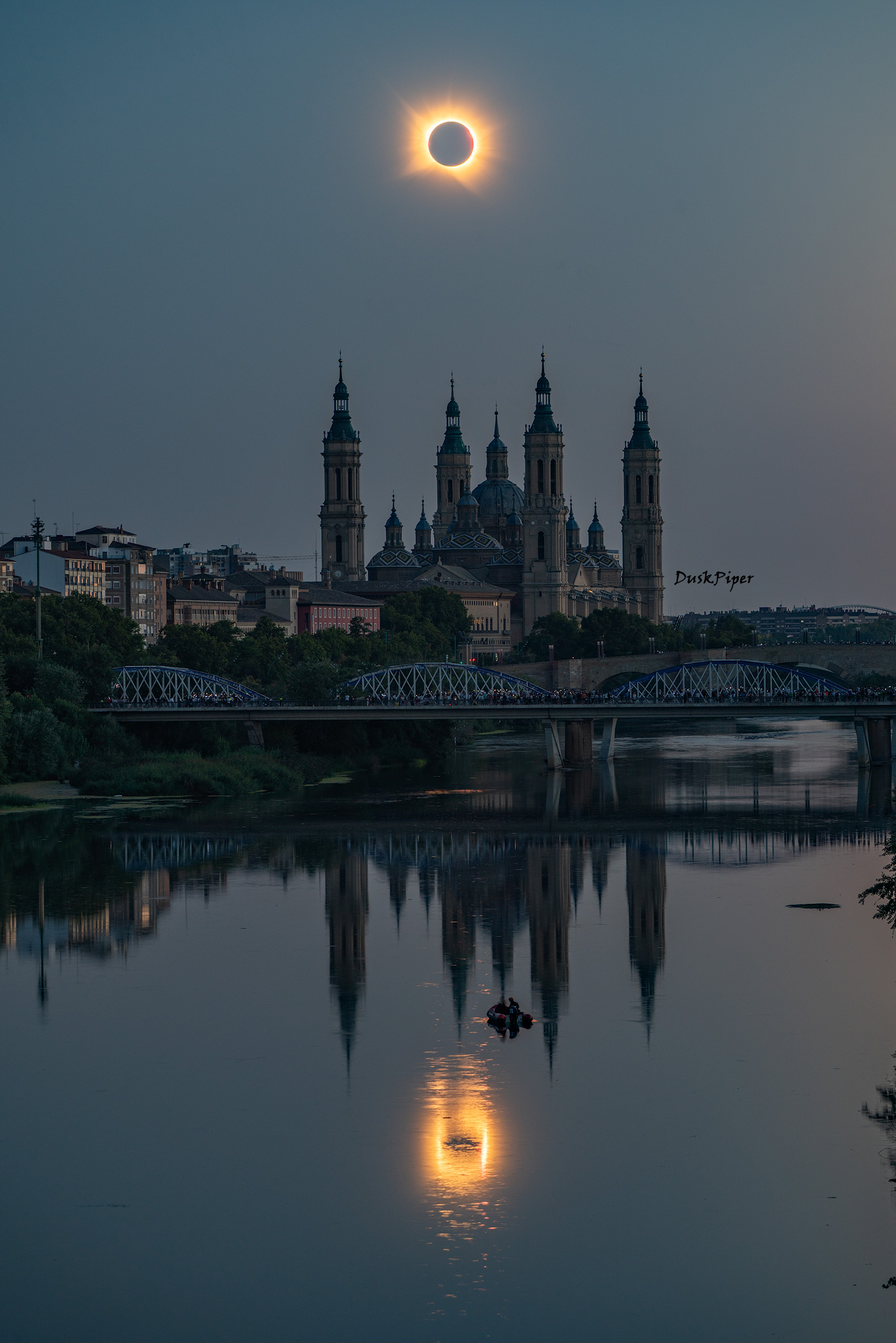
Total Solar Eclipse Over Spain

Customized Star Charts Coming 1st Quarter 2027
We respect your privacy. Unsubscribe at any time.
LST-1 and MAGIC telescopes shatter distance record for the very high-energy blazar OP 313
On Aug. 15, the CTAO LST Collaboration and the MAGIC Collaboration released findings from observations of OP 313, the most distant very-high-energy blazar ever recorded. The paper, published in Ast…
ReadCelestron’s NexImage 20 makes planetary imaging affordable and fun
Since their debut nearly two decades ago, Celestron’s NexImage cameras have introduced many amateurs to solar-system astrophotography. Starting as modified webcams, the series evolved with higher…
Read2026 Full Moon calendar: When to see the Full Moon and phases
The phenomenon of a Full Moon arises when our planet, Earth, is precisely sandwiched between the Sun and the Moon. This alignment ensures the entire side of the Moon that faces us gleams under sunl…
ReadA 4-star system caught eclipsing itself in a way never seen before
Astronomers have found a four-star system doing something that has never been confirmed before. The system, TIC 433545934, has two close pairs of stars orbiting each other. While each pair eclipses…
ReadAug. 24, 2006: Pluto is demoted
After much discussion and debate, an International Astronomical Union (IAU) vote on Aug. 24, 2006, reclassified Pluto as a dwarf planet. “Throw away the placemats. Grab a magic marker for the cla…
ReadVisible planets and night sky guide for August
Visible planets and night sky guide: Love eclipses? Don’t miss these tips for making the most of the upcoming lunar eclipse!
ReadSun news: Quiet sun, but fast solar winds to come
Sun news August 24, 2026: The sun is currently quiet, but fast solar wind from a coronal hole should arrive later this week, possibly bringing auroras!
ReadPluto demoted to dwarf planet 20 years ago today
Pluto is the largest of many small bodies in the outer solar system. That's partly why it was demoted from major planet to dwarf planet in 2006.
ReadEarth's magnetosphere might not protect us from superstorms after all
Science seems like a straightforward endeavor. You come up with a hypothesis, collect data to prove or disprove it, and analyze that data to see whether the hypothesis is right. But anyone who actu…
Read