
The Rhythm of the Spheres
Reading the Night Sky
Wandering in Astronomy
The night sky is the oldest pattern of man, and every culture reads it differently. The stars above keep silent time, moving to a rhythm we are just now beginning to understand. Astronomy is where math, science, art, music, and words meet in a wondrous collision. In this section of our site, learn the basics of astronomy: from how a star chart is made, to projections and art that map the night sky, to how an astrolabe works just like it did thousands of years ago. Watch the North Star shift across centuries, explore how one sky has been mapped by many traditions, read what happened on this day in space, and see tonight’s moon for your location.
Map the Stars
The math behind star charts, with a projection explorer and a working astrolabe.
The Moving Sky
How the sky shifts across centuries, with a precession clock you can run.
The Traditions
One sky reads many ways, with a same-sky overlay of the world’s constellations.
This Day in the Stars
The sky’s events, discoveries, and lore tied to today’s date.
The Moon Tonight
Its phase and face, drawn live for where you’re standing.
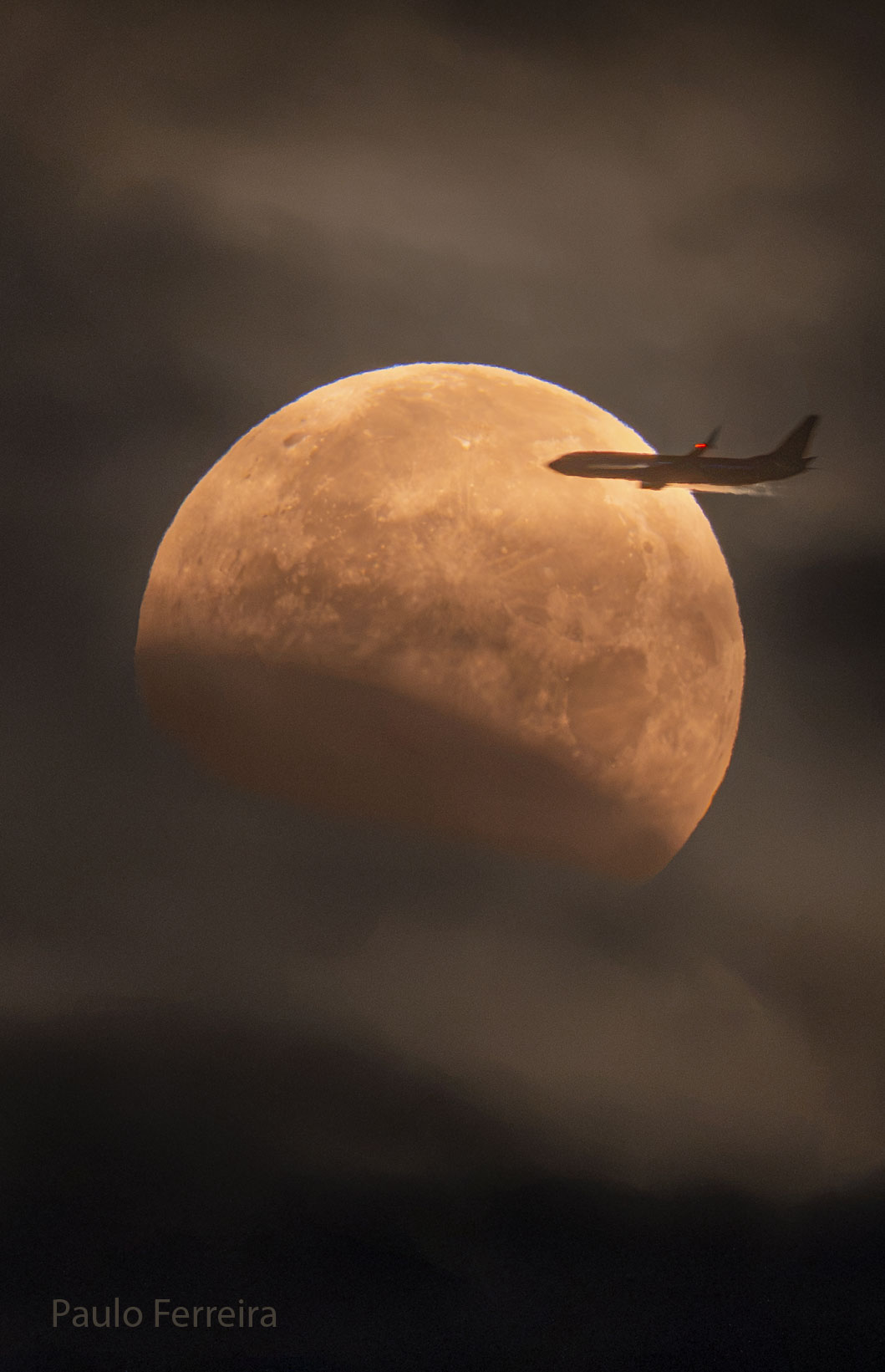
A Plane Lunar Eclipse

Customized Star Charts Coming 1st Quarter 2027
We respect your privacy. Unsubscribe at any time.
Astronomers unmask a supernova impostor
A distant star has captured astronomers' attention over the past decade, teasing them with indications that it will soon explode as a supernova. But new research shows that something else entirely …
ReadGravitational-wave analysis narrows the search for black hole impostors
Black holes are regions of spacetime where gravity is so strong that nothing, not even light, can escape. When two black holes orbit each other and merge, they produce gravitational waves (i.e., ri…
ReadSept. 13, 1994: Ulysses at the Sun’s south pole
A joint NASA-ESA mission, the Ulysses solar probe launched Oct. 6, 1990, from the Space Shuttle Discovery. The mission was tasked with studying the solar wind, mapping the heliosphere, and becoming…
ReadVenus brightest in the evening sky this week
See Venus brightest in the evening sky this week, with greatest brilliancy coming around September 18, 2026. Look west after sunset.
ReadVisible planets and night sky guide for September
Visible planets and night sky guide: Venus reaches its brightest in the sky this week. Look west this evening to see the crescent moon near brilliant Venus.
ReadResearchers pinpoint key early-universe measurement with record precision
An international team, including researchers from the University of Minnesota Twin Cities, has reached a major milestone in "precision cosmology" by measuring the amount of helium created in the un…
ReadAlien tech on the moon? Scientists propose search for microscopic debris
Could there be alien tech on the moon? Scientists propose a new search for microscopic particles shed by alien technology.
ReadThe Sky Today on Sunday, September 13: Venus, the Moon, and Spica
Looking for a sky event this week? Check out our full Sky This Week column. September 12: Dione skims Saturn’s pole Blazing at magnitude –4.8, Venus is nearing its greatest illu…
Read2026 Full Moon calendar: When to see the Full Moon and phases
The phenomenon of a Full Moon arises when our planet, Earth, is precisely sandwiched between the Sun and the Moon. This alignment ensures the entire side of the Moon that faces us gleams under sunl…
Read