

The Rhythm of the Spheres
Reading the Night Sky
Wandering in Astronomy
The night sky is the oldest pattern of man, and every culture reads it differently. The stars above keep silent time, moving to a rhythm we are just now beginning to understand. Astronomy is where math, science, art, music, and words meet in a wondrous collision. In this section of our site, learn the basics of astronomy: from how a star chart is made, to projections and art that map the night sky, to how an astrolabe works just like it did thousands of years ago. Watch the North Star shift across centuries, explore how one sky has been mapped by many traditions, read what happened on this day in space, and see tonight’s moon for your location.
Map the Stars
The math behind star charts, with a projection explorer and a working astrolabe.
The Moving Sky
How the sky shifts across centuries, with a precession clock you can run.
The Traditions
One sky reads many ways, with a same-sky overlay of the world’s constellations.
This Day in the Stars
The sky’s events, discoveries, and lore tied to today’s date.
The Moon Tonight
Its phase and face, drawn live for where you’re standing.
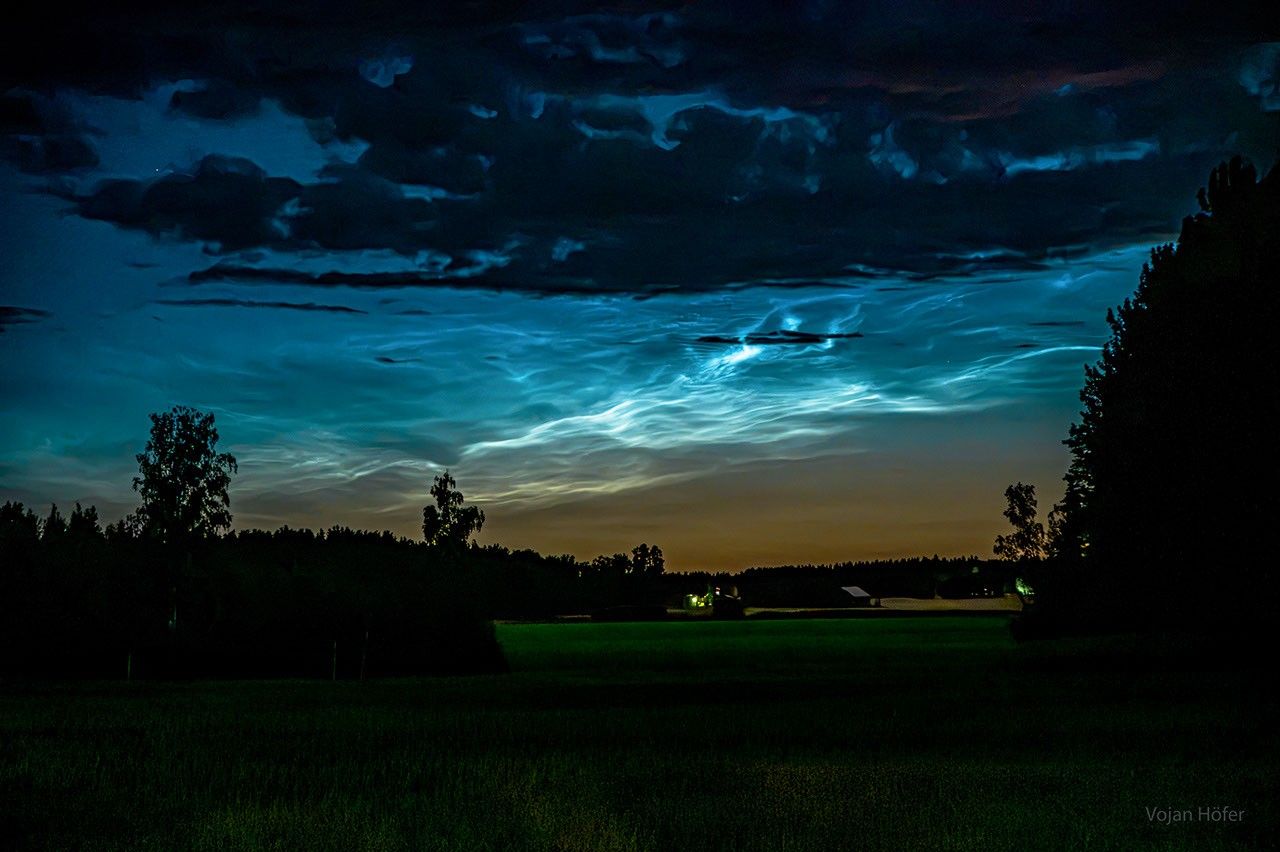
Noctilucent Clouds over Sweden

Customized Star Charts Coming 1st Quarter 2027
We respect your privacy. Unsubscribe at any time.
Sun's outer magnetic field mapped in 3D for the first time
A team of researchers has produced the first global, three-dimensional estimates of the sun's magnetic field, including the area beyond the sun's visible edge. This marks a step toward more accurat…
ReadNASA systems engineering team details Habitable Worlds Observatory mission architecture
Finding an Earth-like world beyond the solar system is the holy grail of exoplanet research, and the field has seen remarkable technological advances in detecting and studying exoplanets since the …
Read2026 Full Moon calendar: When to see the Full Moon and phases
The phenomenon of a Full Moon arises when our planet, Earth, is precisely sandwiched between the Sun and the Moon. This alignment ensures the entire side of the Moon that faces us gleams under sunl…
ReadOct. 28, 1971: The U.K. launches a satellite
The Prospero satellite, which launched on Oct. 28, 1971, holds the distinction of being the first and only British satellite to be launched by a British rocket. (The first British satellite launche…
ReadOrigins of Uranus and Neptune are surprisingly different
A new study suggests that the origins of Uranus and Neptune are quite different, even though the 2 planets are similar in many ways.
ReadSun news: On this day in 2003, one of the biggest flares on record
Sun news October 28, 2026: 23 years ago today, on October 28, 2003, the sun blasted a monster X17.2 flare from active region AR10486.
ReadVisible planets and night sky guide for October and November
Visible planets and night sky guide. Late this evening, the gibbous moon hangs between Capella and Aldebaran. Look for the glittering Pleiades cluster nearby.
ReadThe Sky Today on Wednesday, October 28: The Moon hangs with Uranus
Looking for a sky event this week? Check out our full Sky This Week column. October 27: Follow Kemble’s Cascade The Moon passes 5° north of Uranus at 6 A.M. EDT this morning. You…
ReadDouble debris disk orbiting a dead star hints at our solar system's future
Astronomers using the European Southern Observatory's Very Large Telescope (ESO's VLT) have found a rare disk of debris around a dead star that provides a glimpse of what may happen to our solar sy…
Read